

Vibe coding is shaking up the programming world. It’s a new way to write code using AI tools that turn simple descriptions into functional software. Instead of needing to know complex programming languages, you can just explain what you want in plain English and let the AI do the heavy lifting.
This method is making coding more accessible to everyone, from beginners to seasoned developers. Let's explore what vibe coding is all about, how it works, and what it means for the future of software development.
Key Takeaways
- Vibe coding allows anyone to create software by describing their ideas in natural language.
- AI tools take over the coding process, making it easier for beginners to get started.
- This approach changes the role of programmers from writing code to guiding and refining AI-generated solutions.
- Vibe coding tools are becoming integral to modern development environments, enhancing productivity.
- The future of programming may involve less traditional coding and more collaboration with AI.
Understanding Vibe Coding
Definition and Origin
Okay, so what is vibe coding? It's this new-ish way of programming where you basically tell an AI what you want in plain English, and it spits out the code.
Think of it as coding by describing the feeling you want the program to have, rather than writing out every single instruction. Andrej Karpathy came up with the term, and it's been gaining traction ever since. It's all about using AI to bridge the gap between what you imagine and what the computer does.
Key Principles
It's not just about throwing prompts at an AI and hoping for the best. There are a few key ideas that make vibe coding work:
- Collaboration: It's a team effort between you and the AI. You guide, it generates, you refine.
- Iteration: You're not going to get it perfect on the first try. It's about tweaking and adjusting until you get the result you want.
- Abstraction: You don't need to know all the nitty-gritty details of the code. You're working at a higher level, focusing on the overall behavior.
Vibe coding is about expressing intent, not implementation. It's about describing the what, not the how. This shift in focus can make programming more accessible and intuitive.
Role of AI in Vibe Coding
AI is the engine that makes vibe coding possible. Large language models (LLMs) are trained on massive amounts of code and natural language, allowing them to translate human instructions into working programs.
The AI handles the complex syntax and logic, freeing you to focus on the creative aspects of software development. It's important to note that AI is not perfect, and it can sometimes generate code that is buggy or inefficient. That's why human oversight is still essential. Also, it's not going to help you pick the best stablecoins.
How Vibe Coding Works
Human-AI Collaboration
Okay, so how does this "vibe coding" thing actually work? It's all about teamwork, but instead of humans working with other humans, it's humans working with AI.
You basically tell the AI what you want in plain English (or whatever language you prefer, I guess), and the AI tries to turn that into code. Think of it like explaining a recipe to someone who knows how to cook but doesn't know what you want to make. You give the vibe, and the AI figures out the ingredients and steps.
Iterative Process
It's not like you just give the AI a prompt and BAM, perfect code. Nah, it's more like a back-and-forth. The AI spits out some code, you look at it, say "nope, that's not quite right," and then you tweak your instructions.
It's an iterative process, meaning you go through it again and again until you get something that actually works. It's kind of like sculpting – you start with a block of stone and keep chipping away until you have a statue. Except, you know, with code.
Natural Language Prompts
The key to vibe coding is using natural language. You don't need to know fancy programming terms or syntax. Just describe what you want the code to do in simple, everyday language. Want a button that changes color when you click it?
Just tell the AI that. The better you are at describing what you want, the better the AI will be at generating the right code. It's all about the prompts you give it. Think of it like talking to a really smart, but kind of clueless, assistant. You have to be clear and specific, or you'll end up with something totally off the mark. And don't expect it to understand sarcasm... yet.
It's important to remember that vibe coding isn't about replacing programmers. It's about making programming more accessible and efficient. It's a tool, and like any tool, it's only as good as the person using it. Also, don't expect it to handle complex financial transactions involving things like stablecoins without some serious oversight. That's just asking for trouble.
Benefits of Vibe Coding
Vibe coding is gaining traction, and for good reason. It brings a bunch of advantages to the table, whether you're just starting out or you've been coding for years. Let's break down some of the key benefits.
Accessibility for Beginners
One of the biggest wins of vibe coding is how it lowers the barrier to entry for new programmers. Instead of needing to memorize syntax and complex algorithms right away, beginners can focus on describing what they want the code to do in plain language. This makes the initial learning process way less intimidating.
It's like having a friendly translator between your ideas and the computer. This approach to AI-assisted programming can really spark an interest in coding for people who might have been scared off by traditional methods.
Efficiency for Experienced Developers
Vibe coding isn't just for newbies; it can also seriously speed things up for experienced developers. Think of it as a super-powered pair programmer that never gets tired. It can handle the repetitive tasks and boilerplate code, freeing up developers to focus on the more complex and creative aspects of their projects.
This means less time spent on grunt work and more time spent on problem-solving and innovation. Plus, it can help you explore new ideas and approaches more quickly, since you can rapidly prototype different solutions.
Reduction of Learning Curve
Vibe coding can significantly reduce the learning curve associated with traditional programming. By abstracting away some of the complexities of syntax and low-level implementation details, it allows learners to focus on the logic and structure of their programs. This can lead to a faster understanding of core programming concepts and a more enjoyable learning experience.
Here's a quick look at how vibe coding can impact the learning curve:
- Faster initial progress: See results sooner, which keeps you motivated.
- Focus on concepts: Understand the 'why' before the 'how'.
- Experimentation: Easier to try out new ideas without getting bogged down in syntax errors.
With vibe coding, the initial learning curve is almost flat. It allows more people to build custom tools and automate tasks.
Tools for Vibe Coding
Popular AI Coding Assistants
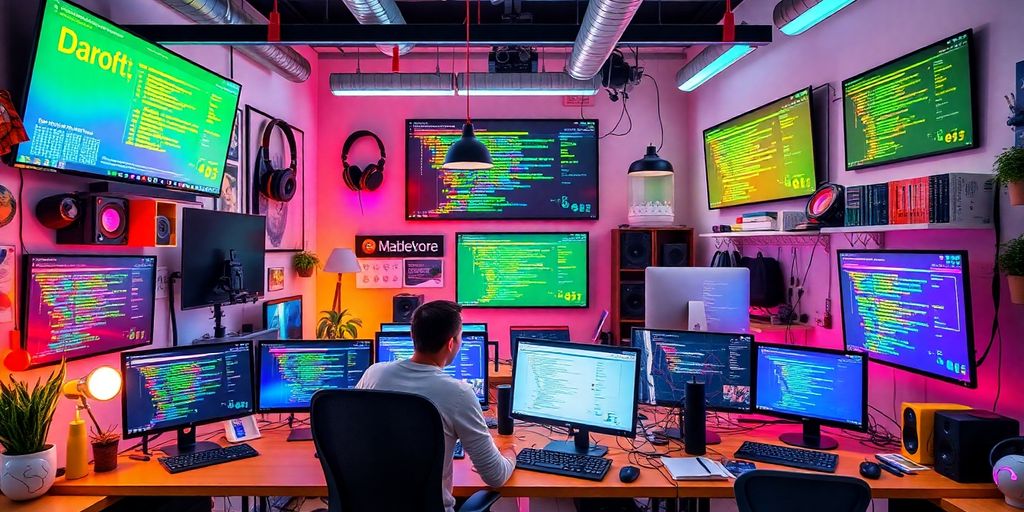
So, you're ready to jump into vibe coding? Awesome! You'll quickly find that a bunch of AI coding assistants are out there, all vying for your attention. Some of the popular ones include tools like GitHub Copilot, which integrates directly into your code editor and suggests code completions as you type.
Then there's also stuff like voice dictation software that can help you communicate with AI. These tools are designed to make coding faster and easier, especially when you're just trying to get your ideas down.
Features of Vibe Coding Tools
What exactly do these vibe coding tools do? Well, a lot! Here's a quick rundown:
- Code Completion: Suggests lines of code or entire blocks based on what you've already written.
- Code Generation: Creates code from natural language descriptions.
- Debugging Assistance: Helps identify and fix errors in your code.
- Refactoring Suggestions: Recommends ways to improve your code's structure and readability.
The best vibe coding tools aren't just about writing code; they're about understanding your intent and helping you translate that into a working program. They should feel like a partner, not just a glorified autocomplete.
Integration with Development Environments
One of the most important things about vibe coding tools is how well they fit into your existing workflow. Most of the good ones integrate directly into popular IDEs (Integrated Development Environments) like VS Code, IntelliJ, and others. This means you don't have to switch between different applications or copy and paste code back and forth.
The integration allows for a smoother coding experience, with AI assistance available right where you need it. Some tools even offer browser-based interfaces, which can be handy for quick experiments or collaborative projects. The key is finding a tool that feels natural and doesn't disrupt your flow.
Challenges and Limitations
Vibe coding, while promising, isn't without its hurdles. It's important to be aware of these limitations to use it effectively and responsibly.
Understanding Generated Code
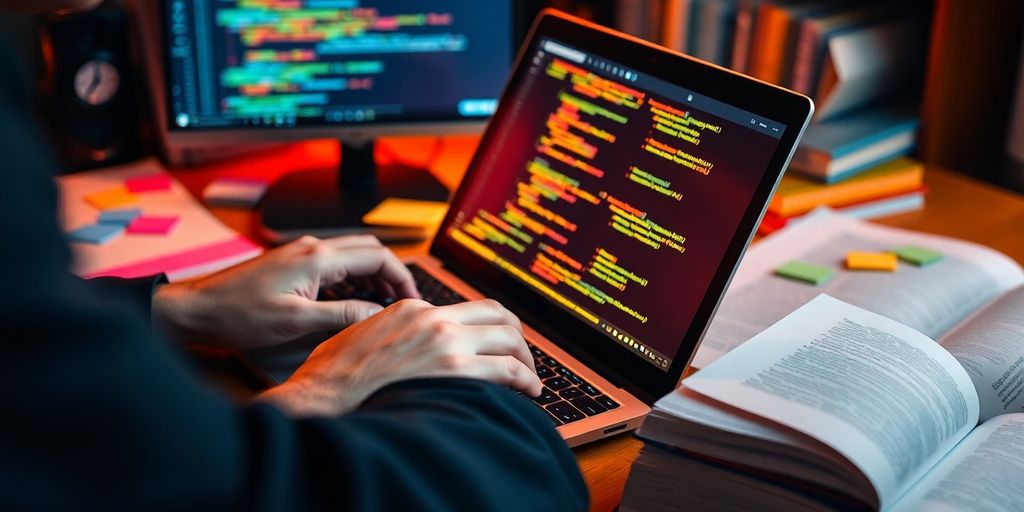
One of the biggest challenges is understanding the code that the AI generates. If you don't have a solid grasp of programming fundamentals, it can be difficult to decipher what the AI has produced.
This can make it hard to customize the code, optimize it, or even identify potential issues. It's like getting a recipe in a language you don't speak – you might be able to follow the steps, but you won't really understand what you're doing or why.
Debugging AI-Generated Code
Debugging AI-generated code can be a real headache. Because you might not fully understand the code, finding and fixing errors becomes much harder. Imagine trying to troubleshoot a car engine when you don't know anything about cars.
You might end up making things worse! Plus, AI can sometimes introduce subtle bugs that are difficult to detect through normal testing. It's also worth noting that the AI might make architectural decisions that are not optimal, and you might not even realize it.
Dependence on AI Tools
Vibe coding relies heavily on AI tools, which can create a dependence that has its own set of problems. What happens if the AI tool goes down, changes its pricing, or is discontinued? You could be left scrambling. Also, the quality of the generated code depends on the AI model itself.
If the model isn't well-trained or has biases, the code might be flawed or produce unexpected results. This is especially concerning when dealing with sensitive data or financial transactions, like those involving stablecoins. It's important to remember that AI is a tool, not a replacement for human expertise.
It's easy to get caught up in the hype of AI, but it's important to remember that these tools are still under development. They can make mistakes, and they're not always the best solution for every problem. It's crucial to have a solid understanding of the underlying technology and to use AI tools responsibly.
Here are some things to keep in mind:
- AI-generated code might not always be the most efficient or secure.
- You need to be able to understand and debug the code.
- Don't rely too heavily on AI tools without understanding the risks.
Future of Vibe Coding
Trends in AI Development
AI is changing fast, and that means vibe coding will too. We're seeing bigger and better language models all the time. These models are getting better at understanding what we want and turning it into code. It's not just about writing code, though.
AI is also getting better at testing and debugging. This could make vibe coding even easier and more reliable. Plus, AI is starting to learn from the code it writes. This feedback loop could lead to some pretty big improvements in how AI helps us code. It's like the AI is learning to learn, which is kind of wild.
Potential Impact on Software Engineering
Vibe coding could really shake things up in software engineering. It might mean more people can get involved in creating software, even if they don't have a ton of coding experience. This could lead to more innovation and different kinds of software.
But it also raises some questions. Will we need as many traditional programmers? What will their role be? Will code become more disposable? It's hard to say for sure, but it's clear that vibe coding has the potential to change how we think about software development.
Evolving Role of Programmers
Programmers aren't going away, but their jobs might look different. Instead of writing every line of code, they might spend more time:
- Defining problems and goals.
- Guiding AI to write the code.
- Testing and refining the AI's output.
- Making sure the code is secure and reliable.
It's like moving from being a builder to being an architect. You're still involved in creating something, but you're focusing on the bigger picture.
Programmers will need to be good at understanding AI and how it works. They'll also need to be good at communicating what they want the AI to do. It's a new set of skills, but it could be really rewarding.
The rise of vibe coding doesn't mean the end of programming as we know it. Instead, it signals a shift in focus. Programmers will likely become more like conductors, orchestrating AI tools to bring their visions to life. This requires a blend of technical understanding, creative problem-solving, and effective communication. The future programmer is part coder, part AI whisperer, and part visionary.
Community and Resources
Online Forums and Discussions
So, you're getting into vibe coding? Awesome! One of the best things you can do is connect with other people who are also exploring this stuff. It's way more fun, and you learn a ton. There are a bunch of online spots where vibe coders hang out.
Think of it like a virtual coffee shop for code. You can ask questions, share your projects, and get feedback. It's a great way to avoid feeling like you're shouting into the void. Finding the right community can seriously boost your vibe coding skills.
- Reddit has some pretty active subreddits dedicated to AI and coding. Search for things like "AI coding" or "assisted coding." You'll find people sharing tips, tools, and their own experiences.
- Discord servers are another good option. A lot of AI coding tools have their own Discord communities where users can chat, get support, and even contribute to the tool's development. It's a more real-time way to connect than forums.
- Stack Overflow is always a solid bet for specific coding questions. Even if your question is about using AI in your workflow, chances are someone else has run into the same issue. Don't be afraid to ask!
I remember when I first started, I was totally lost. Joining a Discord server for one of the AI tools I was using made a huge difference. I got answers to my questions almost instantly, and I even found a few people to collaborate with on a side project. It's all about finding your tribe.
Educational Resources
Okay, so you've got the community thing down. Now, how about actually learning more about vibe coding? Luckily, there are tons of resources out there, from free tutorials to paid courses. The key is to find something that fits your learning style and your budget.
Don't feel like you need to spend a fortune to get started. There's plenty of free stuff that's actually really good. For example, you can find great information about AI tools online.
- YouTube is your friend. Seriously, there are countless channels that offer tutorials on AI coding tools and techniques. Look for channels that focus on practical examples and real-world projects.
- Coursera and Udemy have some excellent courses on AI and machine learning. While they might not be specifically about vibe coding, they'll give you a solid foundation in the underlying concepts.
- The documentation for the AI coding tools you're using is also a goldmine. Don't skip it! It might seem boring, but it's usually the most accurate and up-to-date information available.
Collaborative Projects
Want to take your vibe coding skills to the next level? Try working on a collaborative project. It's a fantastic way to learn from others, build your portfolio, and contribute to something meaningful.
Plus, it's just plain fun. There are a bunch of ways to find collaborative projects. You could join an open-source project, participate in a hackathon, or even start your own project and invite others to join. The experience you gain from working with other developers is invaluable.
- GitHub is the go-to platform for open-source projects. Look for projects that are using AI in interesting ways and see if you can contribute. Even small contributions can make a big difference.
- Hackathons are a great way to meet other developers and work on a project in a short amount of time. There are hackathons focused on AI, coding, and all sorts of other topics. Check out websites like Devpost to find upcoming events.
- If you're feeling ambitious, why not start your own project? Think of something you're passionate about and see if you can use vibe coding to solve a problem or create something new. Then, invite others to join you and build something amazing together.
Wrapping It Up
So, vibe coding is shaking things up in the programming world. It’s all about using AI to help you write code without needing to be a coding whiz. You just tell the AI what you want in plain language, and it does the heavy lifting.
This makes it way easier for folks who might not have a tech background to create their own software. Sure, it’s not perfect, and you still need to keep an eye on what the AI spits out. But the idea that anyone can jump in and start coding is pretty exciting.
Whether you’re a newbie or a seasoned pro, vibe coding opens up a lot of possibilities. It’s a game-changer, and who knows what cool stuff will come out of it in the future?
Frequently Asked Questions
What is vibe coding?
Vibe coding is a new way of programming that uses AI to help create software. Instead of writing code by hand, you describe what you want in simple words, and the AI turns that into code for you.
Who invented the term 'vibe coding'?
The term 'vibe coding' was created by Andrej Karpathy in February 2025. He wanted to explain how people can use AI to code without needing to know all the technical details.
Can beginners use vibe coding?
Yes! Vibe coding is designed to be easy for beginners. You don’t need to have a lot of programming knowledge to start making your own software.
How does AI help in vibe coding?
AI helps by understanding what you want to create and then writing the code for you. This makes programming faster and less complicated.
What are the benefits of vibe coding?
Some benefits include making coding accessible to more people, speeding up the development process, and reducing the time it takes to learn programming.
What are some challenges of vibe coding?
One challenge is that the AI might not always write perfect code, so users need to check and fix any mistakes. Also, relying too much on AI can make it hard to understand how the code works.