
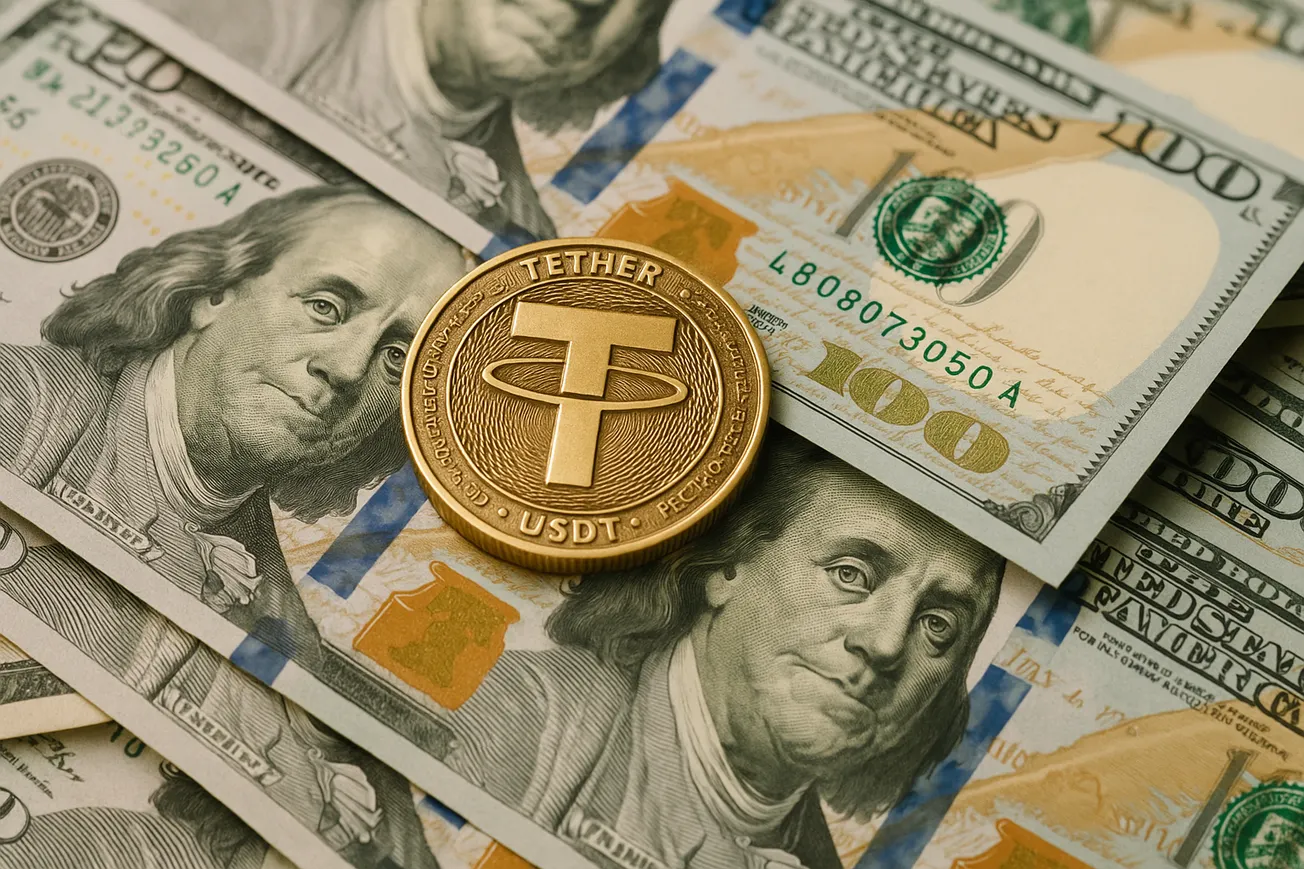
So, you've heard about USDT, right? It's a big deal in the crypto world. People use it all the time to buy and sell other digital coins, and it's supposed to stay steady, unlike Bitcoin or Ethereum, which can go way up or way down in a flash. This guide will walk you through what USDT is all about, how it works, and why so many folks use it. We'll also touch on some of the things people worry about when it comes to USDT, and what its future might look like in 2025. Basically, if you're curious about this USDT Stablecoin FAQ stuff, you're in the right spot.
Key Takeaways
- USDT is a stablecoin, meaning it's designed to keep a steady value, usually pegged to the US dollar. This helps people avoid the wild price swings common with other cryptocurrencies.
- It's super popular for trading on crypto exchanges and is used a lot in decentralized finance (DeFi) for things like lending and borrowing.
- Tether, the company behind USDT, says each USDT is backed by reserves. But there have been questions about how transparent they are with what's in those reserves.
- You can use USDT for fast, cheap cross-border payments, which is pretty cool. It lets you move money around without all the usual bank hassles.
- Like anything in crypto, USDT has its risks, including concerns about its backing and how regulators might treat it in the future. It's always smart to stay informed.
Understanding USDT: The Core of Stablecoins
Defining USDT and Its Origins
USDT, or Tether, is the original and most used stablecoin. It's pegged 1:1 to the U.S. dollar. Tether Limited issues it, and it operates on multiple blockchains, including Ethereum, Tron, Solana, and Polygon. Stablecoins combine price stability with the functionality of cryptocurrencies.
Think of it as a digital dollar. It aims to bring the stability of fiat currency to the crypto world.
The Role of Stablecoins in Crypto
Stablecoins are a bridge between traditional finance and the crypto world. They let users escape crypto volatility and transfer funds instantly. They also allow participation in DeFi and yield farming, and provide a hedge against inflation or economic instability.
Stablecoins are crucial for trading, lending, and borrowing in the crypto space. They provide a stable unit of account and a reliable store of value. For example, traders use USDT to quickly move in and out of positions without converting back to fiat.
Stablecoins are designed to maintain a stable value, usually by being pegged to fiat currencies or commodities. They serve as a bridge between traditional finance and crypto, allowing users to escape crypto volatility, transfer funds instantly, participate in DeFi, and hedge against inflation or economic instability.
How USDT Maintains Its Peg
USDT maintains its value through a fiat-collateralized mechanism. This means that for every USDT in circulation, Tether claims to hold an equivalent amount of U.S. dollars in reserve. If there are 1 million USDT in circulation, Tether should hold $1 million in reserves, ensuring a 1:1 value ratio where 1 USDT = $1.
However, the exact composition of these reserves has been a point of contention. Investors often question whether Tether holds sufficient reserves to match the amount of USDT in circulation. While Tether claims to back its tokens 1:1 with U.S. dollars, the company has faced scrutiny over the exact composition of its reserves, which may include other assets like bonds, stocks, or cryptocurrencies.
Here's a breakdown of how stablecoins maintain their value:
- Fiat-Collateralized: Backed by real-world currencies like USD, EUR, etc.
- Crypto-Collateralized: Backed by other cryptocurrencies.
- Commodities-Collateralized: Backed by tangible assets such as gold or oil.
- Algorithmic Stablecoin: Value controlled by algorithms that regulate supply.
USDT's Market Dominance and Utility
Market Capitalization and Liquidity
USDT continues to be the undisputed king of stablecoins. Its market capitalization dwarfs all competitors, ensuring deep liquidity across exchanges. This means you can move in and out of positions quickly with minimal slippage.
Think about it: when you're trading, you want to know you can actually sell your assets when you need to. USDT's massive liquidity provides that assurance.
Multi-Chain Presence and Accessibility
USDT isn't confined to just one blockchain. It's available on pretty much every major network, from Ethereum to Tron to Solana. This multi-chain support makes it super accessible.
It's like having a universal adapter for your crypto transactions. You can use it wherever you go, regardless of the underlying blockchain. This widespread availability is a huge advantage.
Primary Use Cases in the Crypto Ecosystem
USDT has become the backbone of the crypto trading world. It's used for everything from facilitating trading pairs on exchanges to enabling cross-border payments.
USDT's stability makes it ideal for traders looking to park their funds during volatile periods. It's also heavily used in DeFi for lending, borrowing, and yield farming.
Here's a quick rundown of its main uses:
- Trading: The most common use, providing a stable base currency for trading crypto assets.
- DeFi: Used extensively in decentralized finance protocols for various applications.
- Remittances: Facilitating faster and cheaper cross-border money transfers.
- Store of Value: A safe haven during market downturns.
USDT's utility is undeniable. It's a workhorse that keeps the crypto economy moving. Tether Limited has really made a name for themselves.
Transparency and Reserve Management
Tether's Reserve Composition
Okay, so let's talk about what actually backs USDT. It's not just sitting on piles of U.S. dollars, even though that's the basic idea. Tether's reserves are a mix of things, and that mix has changed over time.
They hold cash, sure, but also things like commercial paper, bonds, and even other cryptocurrencies. This is where things get a little complicated, because the value of those other assets can fluctuate.
Evolution of Attestation Reports
For a while, it was kind of the Wild West when it came to knowing what Tether actually held. The attestation reports have gotten better, but there's still room for improvement. They've moved from simple statements to more detailed breakdowns, but the frequency and depth are still debated.
These reports are supposed to give us a snapshot of the assets backing USDT at a specific point in time. It's not a real-time audit, so there's always a bit of a lag.
Comparing USDT Transparency with Other Stablecoins
USDT isn't the only stablecoin out there, and they all handle transparency a bit differently. Some, like USDC, go for regular, full audits by established firms. This gives people more confidence, because it's a deeper look than what Tether has traditionally provided. You can see their AML Policy Statement on their website.
Others might use different mechanisms, like algorithmic controls, which come with their own set of risks. It's all about finding the right balance between stability, transparency, and trust.
It's important to remember that no stablecoin is completely without risk. Understanding the reserve composition and the level of transparency is key to making informed decisions. Diversification across different stablecoins can also help mitigate risk.
Here's a quick comparison table:
| Feature | USDT | USDC |
|---|---|---|
| Reserve Type | Mixed (cash, commercial paper, etc.) | Primarily cash and short-term treasuries |
| Audit Frequency | Periodic attestations | Monthly audits |
| Transparency | Moderate | High |
| Regulatory Focus | Increasing | High |
USDT's market capitalization and liquidity are still very high, but transparency is an important factor to consider.
Practical Applications of USDT
Facilitating Crypto Trading and Investments
USDT is super useful for getting into crypto trading. You can easily swap your regular money for USDT on most exchanges. Then, you can use that USDT to buy other cryptocurrencies. It's like having a stable base currency within the crypto world.
It's pretty simple to get started. First, you open an account on an exchange. Then, you deposit funds and convert them to USDT. After that, you can complete your purchase. Your USDT will be stored in your digital wallet.
USDT's stability makes it a popular choice for traders.
Integration within Decentralized Finance (DeFi)
DeFi loves USDT. It's used a lot in lending, borrowing, and providing liquidity on platforms like Aave and Compound. Because it's a stablecoin, it helps reduce the risk of volatility when you're trying to earn interest or trade on these platforms. It's also used in yield farming, where you can earn rewards by staking your USDT in liquidity pools.
USDT gives users full control over their funds, reducing the risk of bank account freezes.
Cross-Border Transactions and Remittances
Sending money across borders can be a pain, but USDT makes it easier and faster. Traditional methods often involve high fees and slow processing times. With USDT, you can send money almost instantly and with lower fees. This is especially helpful for remittances, where people are sending money back home to their families.
USDT transactions can be completed directly on blockchain networks without intermediaries, resulting in faster transactions and lower fees. This efficiency contributes to its enduring popularity.
Here's a quick comparison of traditional vs. USDT remittances:
| Feature | Traditional Remittances | USDT Remittances |
|---|---|---|
| Speed | Days | Minutes |
| Fees | High | Low |
| Accessibility | Limited | Wide |
| Transparency | Opaque | Transparent |
USDT is widely used not only for cryptocurrency investments but also for secure value storage with the flexibility to transfer, deposit, or withdraw funds without banking restrictions.
Navigating the Risks Associated with USDT
Concerns Regarding Reserve Audits
One of the biggest question marks surrounding USDT has always been the composition and verification of its reserves. Do they really have enough USD or equivalent assets to back every USDT token in circulation? That's the multi-billion dollar question, isn't it?
While Tether publishes attestation reports, the level of detail and the nature of these reports have been points of contention. People want full, independent audits, not just attestations. It's like the difference between someone saying they're fit and a doctor confirming it with tests. For example, the composition of Tether's reserves has been scrutinized, with questions raised about the inclusion of commercial paper and other assets.
Regulatory Scrutiny and Potential Impacts
USDT's dominance hasn't gone unnoticed by regulators around the globe. The regulatory landscape is constantly evolving, and increased scrutiny could lead to new rules or restrictions on stablecoins. This could impact USDT's accessibility, utility, and even its peg to the dollar.
Imagine if the SEC suddenly decided to classify USDT as a security. That would change everything overnight. Or if new KYC/AML regulations made it harder to use USDT for everyday transactions. These are the kinds of things we need to be prepared for.
Counterparty Risk Considerations
Counterparty risk is always a factor in crypto, and USDT is no exception. If you're holding USDT on an exchange or using it in a DeFi protocol, you're relying on those platforms to remain solvent and secure. If a major exchange that holds a significant amount of USDT were to collapse, it could trigger a cascade of liquidations and negatively impact the price of USDT.
It's important to remember that USDT, like any financial instrument, isn't risk-free. Diversification, due diligence, and staying informed are key to managing these risks effectively.
Here's a quick rundown of some key risks:
- De-pegging: The risk that USDT loses its 1:1 peg to the US dollar.
- Regulatory Action: Potential restrictions or bans from governments.
- Counterparty Failure: Risk associated with exchanges or platforms holding USDT.
USDT in the Broader Stablecoin Landscape
Distinguishing USDT from Other Stablecoins
USDT, being the first mover, has a significant advantage in terms of adoption and liquidity. It's pretty much everywhere. But, it's not the only stablecoin out there, and understanding the differences is key.
USDC, for example, often touts its regulatory compliance and frequent audits as a selling point. Some investors see it as a safer bet. Then you have DAI, which is a decentralized stablecoin, backed by crypto collateral. It operates differently, aiming for more decentralization. Finally, there's PAX Gold (PAXG), which gold-backed digital token, offering a different value proposition altogether.
USDT's Role in Daily Transaction Volume
USDT plays a huge role in daily crypto transactions. It's a major source of liquidity for exchanges. Think about it: most trading pairs involve USDT. This high volume makes it easy to get in and out of positions quickly.
It's also used a lot in arbitrage, where traders take advantage of price differences across exchanges. This keeps the market efficient. While other stablecoins are gaining ground, USDT still dominates in terms of volume.
Future Trends in Stablecoin Development
The stablecoin world is constantly changing. We're seeing more innovation, with new types of stablecoins popping up all the time. Algorithmic stablecoins, for instance, try to maintain their peg using algorithms, though they've had their share of problems.
Regulatory scrutiny is also increasing, which could lead to more standardization and oversight. Popular stablecoins like USDT will need to adapt to these changes to stay competitive. The integration of stablecoins with Central Bank Digital Currencies (CBDCs) is another trend to watch. It could reshape the entire financial landscape.
Stablecoins are becoming more and more important in both traditional finance and the crypto world. They offer a way to move value quickly and efficiently, and they're being used in all sorts of new applications. As the market matures, we'll likely see even more innovation and integration with existing financial systems.
The Future Outlook for USDT in 2025
Anticipated Regulatory Frameworks
Okay, so by 2025, we're expecting some real movement on the regulatory front. It's been a long time coming, and everyone in the crypto space is holding their breath. The big question is, how will governments worldwide actually classify stablecoins like USDT? Will they treat them like securities, like currency, or something else entirely? The answer to that question will shape everything.
If regulators come down hard, demanding strict licensing and capital reserve requirements, it could squeeze USDT's market share. On the other hand, clear and reasonable rules could actually boost institutional adoption by giving big players the confidence they need to jump in. It's a bit of a waiting game, but the stakes are high.
Growing Institutional Adoption
Speaking of institutional adoption, that's another huge trend we're watching closely. Right now, most USDT use is driven by retail traders and crypto natives. But imagine a world where major corporations start using USDT for international payments or where hedge funds allocate a significant chunk of their portfolio to stablecoins. That would be a game-changer.
For this to happen, institutions need to feel secure about USDT's stability and regulatory compliance. They're not going to risk their reputations on something that's seen as shady or unstable. If Tether can continue to improve its transparency and work with regulators, we could see a surge in institutional interest. Think about it: faster, cheaper cross-border transactions, easier access to DeFi yields – the potential is massive.
Integration with Emerging Financial Systems
USDT's future isn't just about existing crypto markets; it's also about how it integrates with new financial systems. We're talking about things like central bank digital currencies (CBDCs), tokenized assets, and decentralized finance (DeFi) protocols. Imagine a world where you can seamlessly swap USDT for a digital dollar issued by the Federal Reserve or use it as collateral in a DeFi lending platform.
The key here is interoperability. USDT needs to be able to work with all these different systems without friction. That means building bridges between blockchains, adopting open standards, and collaborating with other players in the financial ecosystem. If Tether can pull that off, USDT could become a truly universal digital currency.
Here's a quick look at potential integration points:
- CBDCs: USDT could act as a bridge between traditional finance and CBDCs, facilitating easier on- and off-ramps.
- Tokenized Assets: USDT could be used to settle trades of tokenized stocks, bonds, or real estate.
- DeFi: USDT could provide stable liquidity for DeFi protocols, reducing the risk of impermanent loss.
Ultimately, the future of USDT depends on its ability to adapt and innovate. It needs to stay ahead of the curve in terms of technology, regulation, and market demand. If it can do that, it has the potential to remain a dominant player in the stablecoin space for years to come. The USDT stablecoin is here to stay.
Conclusion
So, that's the rundown on USDT. It's a big player in the crypto world, no doubt about it. People use it a lot because it's easy to get and pretty stable, which is nice when other coins are jumping all over the place. But, you know, there's always that talk about its reserves, and some folks prefer other stablecoins for that reason. The crypto space changes fast, so keeping up with what's happening with USDT and how regulations might shift is a good idea. It's still a go-to for many, but being aware of the details helps you make smart choices.
Frequently Asked Questions
What exactly is USDT?
USDT is a type of cryptocurrency called a stablecoin. It was created to have a steady value, usually matching the U.S. dollar one-to-one. This means 1 USDT should always be worth about 1 U.S. dollar. It's different from other cryptocurrencies like Bitcoin, which can change in value a lot.
Why is USDT so important in the world of crypto?
USDT is really important in the crypto world because it helps people trade digital money without worrying about big price swings. Imagine you want to buy a new coin, but Bitcoin's price is jumping all over the place. You can use USDT to lock in your value, making trades much smoother and less risky. It acts like a digital dollar.
How does USDT keep its value steady, like the U.S. dollar?
Tether, the company behind USDT, says that for every USDT coin out there, they have a U.S. dollar or something just as good (like short-term government bonds) saved up. This is supposed to make sure that USDT always stays at its dollar value. They share reports to show what they have in their reserves.
What are the main ways people use USDT?
People use USDT for many things. It's great for trading other cryptocurrencies on exchanges because it's stable. You can also use it in decentralized finance (DeFi) apps, which are like digital banks, to lend, borrow, or earn rewards. Plus, it's used for sending money across borders quickly and cheaply, avoiding regular bank fees and delays.
Are there any risks or things to be careful about with USDT?
While USDT is very popular, some people worry about whether Tether truly has enough money to back all the USDT coins. There have been questions about how clear they are with their financial reports. Also, governments are starting to look more closely at stablecoins, which could change how USDT works in the future. It's good to be aware of these things.
How is USDT different from other stablecoins, and what's its place in the bigger picture?
USDT is one of many stablecoins, but it's the biggest and most used. Other stablecoins, like USDC, also aim to match the U.S. dollar, but they might have different ways of showing their reserves or different companies behind them. USDT handles a huge amount of daily trades in crypto, showing how widely it's used. The future of stablecoins, including USDT, will likely involve more rules from governments and more use by big companies.