

In July 2025, Tether (USDT) once again solidified its position as the most traded stablecoin in the world, moving $3.34 trillion in total volume over the course of the month.
With an average daily trading volume of $107.7 billion, USDT demonstrated unmatched liquidity, tight peg stability, and consistent market cap performance.
This report breaks down the key metrics, trading patterns, and price stability of Tether throughout July 2025.
Key July 2025 Highlights
- Total trading volume: $3,339,958,597,581
- Average daily volume: $107.7 billion
- Highest trading day: July 18, 2025 – $171.39 billion
- Lowest trading day: July 5, 2025 – $36.82 billion
- Average closing price: $1.00025
- Price range: $0.99872 – $1.00176 (tight peg deviation)
- Average market cap: ~$164 billion
These figures put USDT far ahead of any other stablecoin, both in terms of transactional volume and market dominance. Even during its lowest trading days, Tether processed more value than the daily GDP of many small nations.
1. Trading Volume Trends
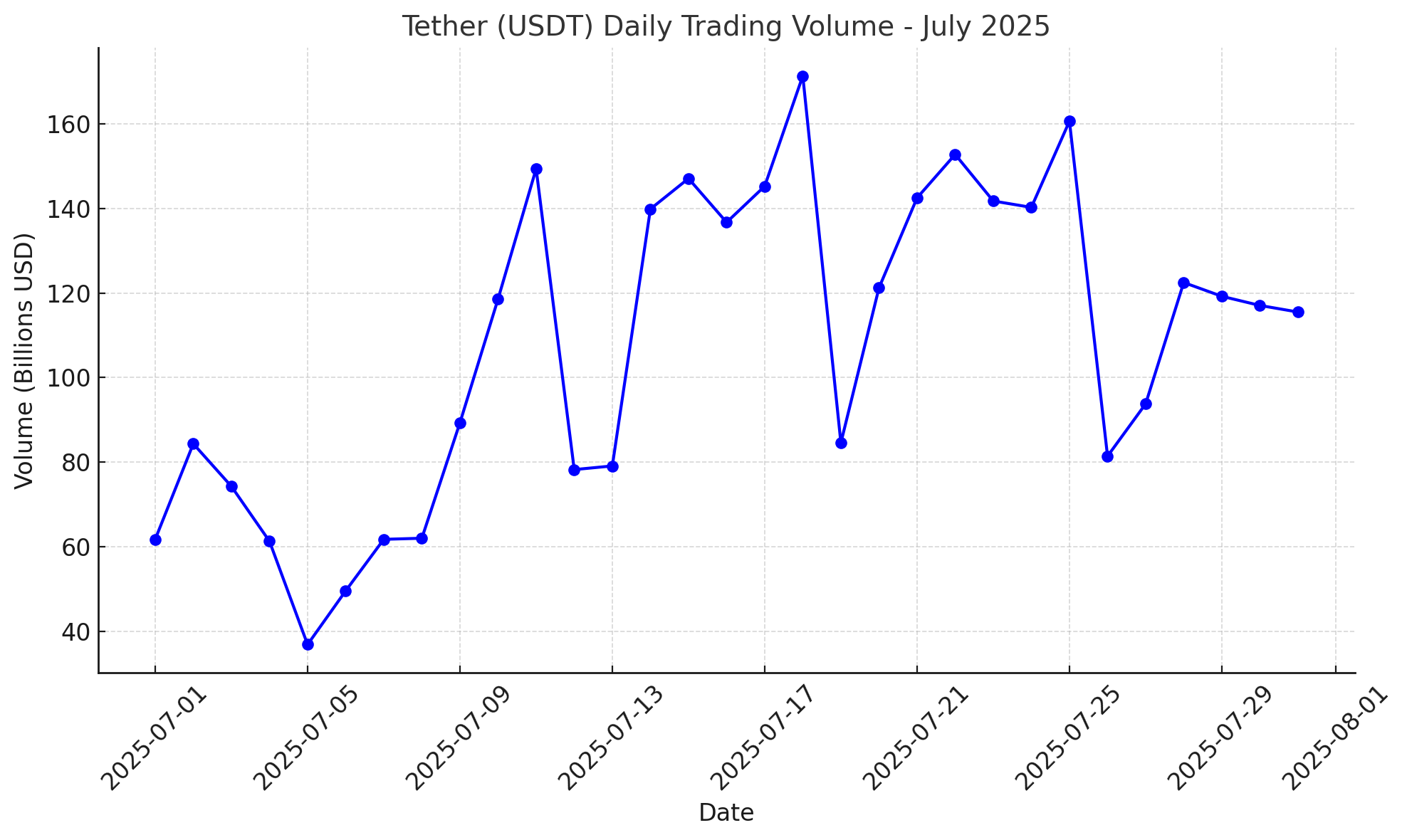
Tether’s daily trading volume fluctuated significantly throughout July, with notable surges in mid-month.
- Peak volume on July 18 reached $171.39 billion, the highest single-day turnover of the month.
- The lowest volume occurred on July 5, with $36.82 billion traded, still a substantial figure compared to most cryptocurrencies.
Analysis: The volume surge in mid-July likely coincided with increased volatility in major cryptocurrencies, prompting traders to shift into stable assets. This kind of pattern underscores USDT’s role as a liquidity haven during market uncertainty.
2. Peg Stability
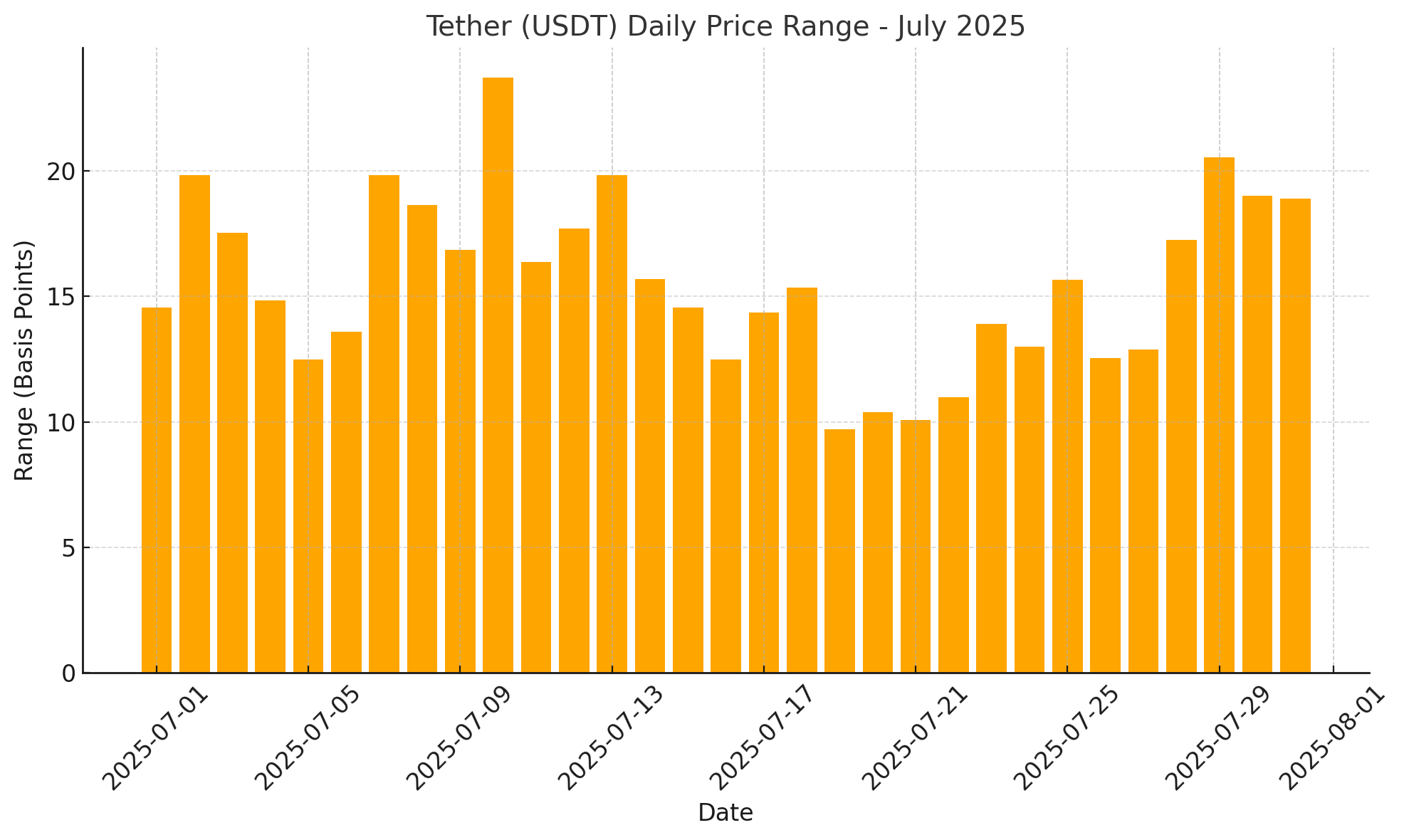
Despite massive trading activity, Tether maintained an exceptionally tight peg:
- Average closing price: $1.00025
- Largest upward deviation: +0.000176 ($1.00176)
- Largest downward deviation: –0.00128 ($0.99872)
These minimal price swings highlight Tether’s reliability as a stable settlement asset for traders, exchanges, and institutions.
Analysis: Maintaining this level of peg stability with trillions in monthly volume speaks to the strength of Tether’s reserve management. Such consistency is a major reason why institutional traders and OTC desks favor USDT over alternatives.
3. Liquidity & Turnover
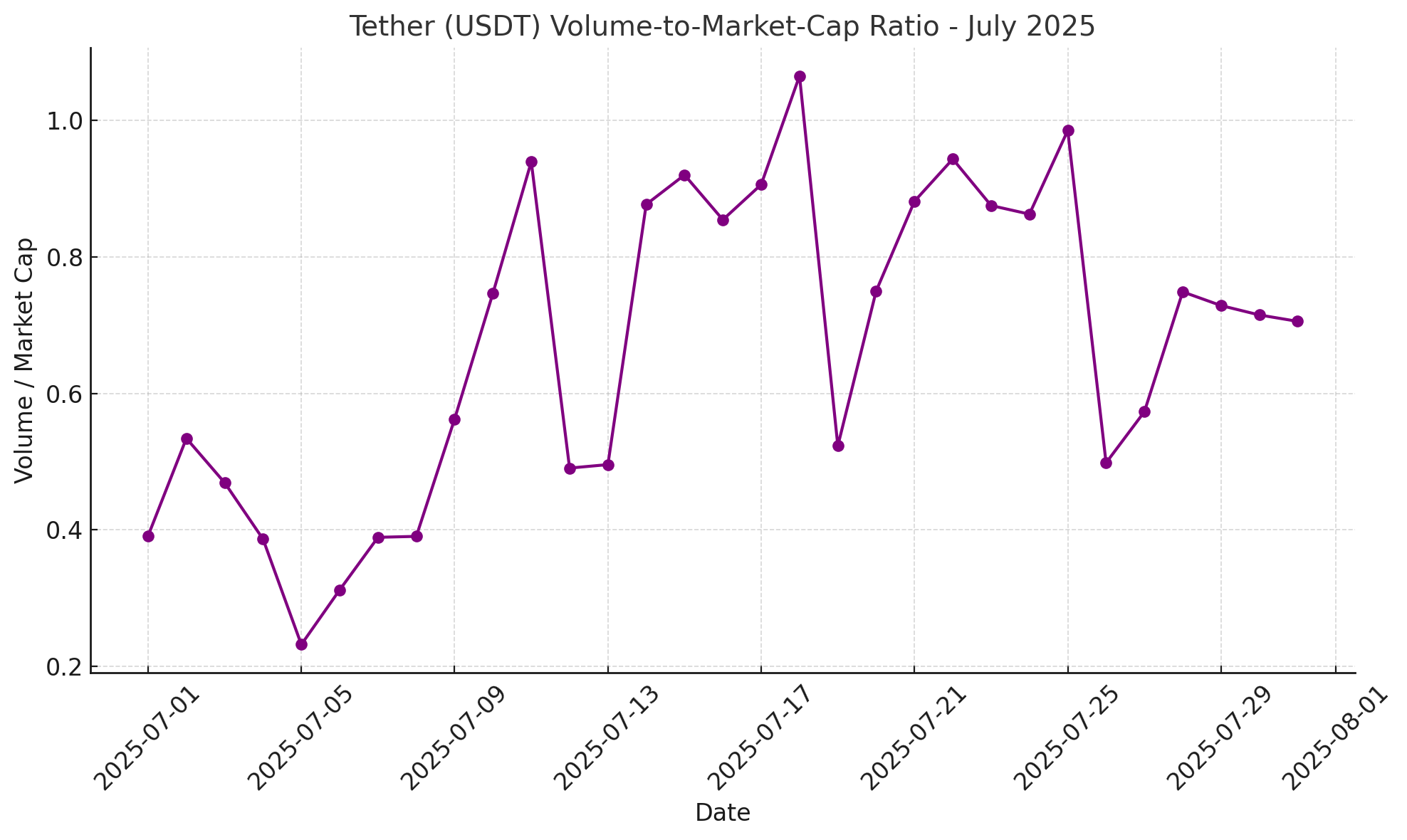
The Volume-to-Market-Cap Ratio shows that on several days, USDT’s daily trading volume exceeded its total market cap. This indicates:
- Extremely high liquidity
- Constant movement between exchanges, DeFi protocols, and OTC desks
- Strong utility as a settlement and arbitrage tool
Analysis: A turnover rate above 1.0 suggests that the entire supply of USDT is being recycled through markets on a near-daily basis. This high-speed circulation is rare even for top-tier assets like Bitcoin and points to Tether’s central role in crypto settlement infrastructure.
4. Intraday Volatility
While USDT’s peg remained firm, its intraday price range reached nearly 24 basis points on the most volatile day of the month. These brief fluctuations often correspond with sudden spikes in trading activity.
Even at its most volatile, USDT’s price movements are minuscule compared to other crypto assets, which can swing several percent in minutes. The data suggests these intraday blips are more likely driven by arbitrage inefficiencies than any systemic peg risk.
5. Key Observations
- Mid-month spikes: The largest trading days occurred between July 15–20, possibly tied to macroeconomic events or large-scale crypto liquidations.
- Liquidity dominance: Even on low-volume days, USDT moved more than the combined daily volume of most altcoins.
- Market confidence: The tight peg and stable market cap reinforce Tether’s role as the dominant liquidity provider in the crypto ecosystem.
These patterns reinforce the idea that USDT acts as both a flight-to-safety asset and a high-frequency transactional medium. The consistency of market confidence suggests that, despite scrutiny, USDT’s market position remains unchallenged.
Conclusion
July 2025 once again proved that Tether is the backbone of global crypto trading.
With over $3.3 trillion moved in a single month and an unwavering $1 peg, USDT remains the settlement currency of choice for traders, institutions, and DeFi platforms.
Next month’s report will track whether Tether can maintain this pace — and how it responds to any shifts in global markets, regulatory changes, or stablecoin competition.
Related:
Visit Stablecoin Insider for more stablecoin insights like this.
FAQ: Tether July 2025 Market Report
1. How much value did Tether process in July 2025?
Tether processed $3.34 trillion in total trading volume, averaging $107.7 billion per day.
2. Did Tether maintain its peg to $1 during July?
Yes, with an average closing price of $1.00025 and minimal deviations, Tether’s peg remained exceptionally stable.
3. What was the highest daily trading volume?
The highest single-day volume was on July 18, 2025, at $171.39 billion.
4. How does Tether’s liquidity compare to other cryptocurrencies?
Tether’s turnover rate often exceeds its market cap, showing unmatched liquidity and usage compared to most other digital assets.
5. Why is Tether’s intraday volatility important?
Even small intraday swings reveal market activity and arbitrage opportunities but remain too minor to threaten the peg.