

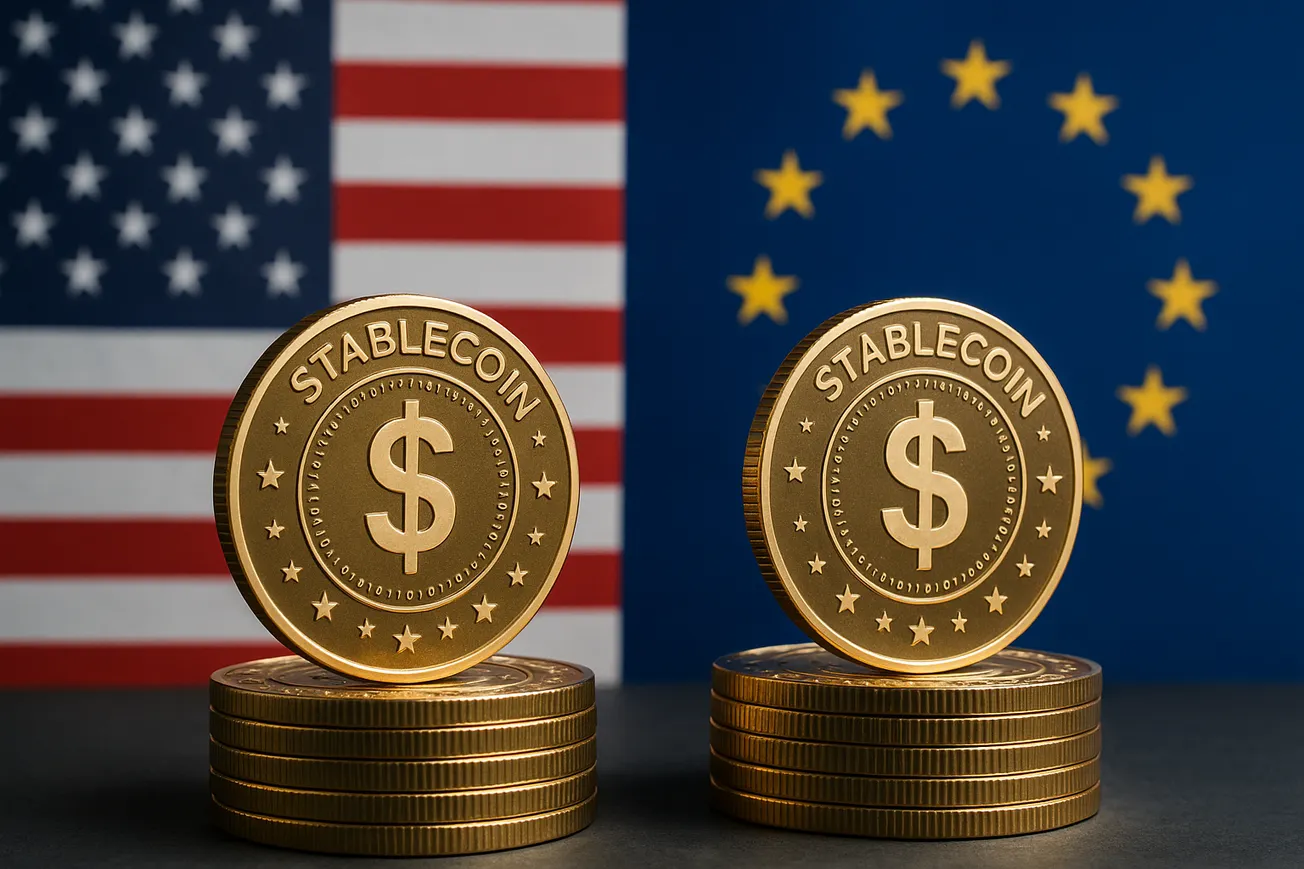
Stablecoins are a big deal in the world of digital money, and it looks like 2025 is going to be a really important year for them. Governments all over the place are trying to figure out how to handle these digital assets, especially since they're becoming more common for payments. The European Union already has some rules in place, but the US and UK are still working on theirs. It's interesting to see how different countries are approaching this, even though everyone pretty much wants the same thing: to keep things stable and protect regular people.
Key Takeaways
- The EU's MiCA framework is already active, making it a leader in stablecoin rules.
- The US is trying to pass new laws, like the GENIUS Act, to create a clear path for stablecoins.
- The UK is also working on its own rules, but things seem a bit slower there compared to the EU.
- Stablecoin issuers are looking at places like the Middle East for growth as global rules change.
- Even with different rules, many countries agree on basic things like requiring stablecoins to be fully backed by reserves.
Current Landscape of Stablecoin Regulations
The regulatory landscape for stablecoins is rapidly evolving across the globe. Different regions are taking varied approaches, reflecting their own priorities and regulatory styles. Let's take a look at the current state of affairs.
European Union's MiCA Framework
The EU is ahead of the curve with its Markets in Crypto-assets Regulation (MiCA). MiCA has been in effect since June 29, 2023, and fully applicable since December 2024, making it one of the most comprehensive frameworks for crypto assets. It sets uniform market rules for crypto assets across the EU.
For stablecoins, algorithmic stablecoins are essentially banned because MiCA doesn't consider them asset-referenced tokens. Fiat-backed tokens must have a liquid reserve of a certain quality.
United States Legislative Progress
Over in the US, both the House and Senate are working on legislation to integrate stablecoins into the financial system. They're aiming to establish federal and state oversight, plus accounting and reporting rules. The GENIUS Act of 2025 US Stablecoins Act is the main bill being considered.
It's worth noting that even without specific stablecoin legislation, some stablecoins already operate under existing regulations. Circle's USDC is a prime example. Circle is registered as a money services business with FinCEN and holds money transmitter licenses in most states.
United Kingdom's Regulatory Development
The UK is also making strides in developing its own regulatory framework for crypto assets. HM Treasury released a near-final draft statutory instrument on April 29, 2025, to bring crypto asset activities, including stablecoin issuance, into the UK regulatory perimeter. The FCA also released a consultation paper on May 28, 2025, regarding its proposed rules for stablecoin issuance and crypto asset custody.
The UK's approach aims to balance innovation with consumer protection. However, the timelines for implementation remain somewhat vague, which could impact investor confidence.
In comparison to the US, the UK's regulation is still sluggish and vague. The 2025 schedule looks tightly packed with a lot of rules to be drafted and plans for a regime to go live are not pinned to any specific date. Ambitious plans with vague deadlines are not likely to instill confidence in crypto investors and businesses.
Key Regulatory Principles and Divergences
Stablecoin regulation is heating up globally, with the EU leading the charge. The US, UK, and Hong Kong are all playing catch-up, trying to figure out how to handle these digital assets. While everyone agrees on the need for consumer protection and financial stability, their approaches are pretty different.
Authorization and Supervision Requirements
Basically, everyone agrees that stablecoin issuers need some kind of license and oversight. The EU's MiCA framework is super strict, requiring authorization for anyone offering stablecoins to EU residents, no matter where the issuer is located. The UK is a bit more relaxed, focusing on issuers actually based in the UK. The US is considering both federal and state-level authorization, which could get interesting. It's like a regulatory patchwork quilt.
Reserve Backing and Asset Safeguarding
A big point of agreement is the need for 1:1 reserve backing. This means that for every stablecoin issued, there needs to be an equivalent amount of safe, liquid assets held in reserve. Everyone's also on board with safeguarding these assets, but the specifics vary. For example, MiCA has pretty detailed rules about what counts as a suitable reserve asset and how it needs to be managed. The US is still figuring out the details, but the general idea is the same: protect the reserves.
Territorial Scope and Issuance Limitations
This is where things get really interesting. The EU's MiCA has a broad reach, snagging any stablecoin offered or traded within the EU, regardless of where the issuer is. The UK is more focused on issuers within its borders. The US is still debating the scope, but it looks like they're aiming to regulate stablecoins used within the US. Hong Kong is also in the mix, focusing on stablecoins tied to the Hong Kong dollar, even if issued elsewhere. It's a global game of regulatory whack-a-mole.
It's worth noting that the Financial Stability Board's recommendations have played a big role in pushing for some common ground. But, each jurisdiction has its own priorities and regulatory style, leading to some pretty distinct approaches. It's not a one-size-fits-all situation.
To summarize, here's a quick comparison:
- EU (MiCA): Broad scope, strict rules, EU-regulated institutions only.
- UK: Focus on UK-based issuers, aiming for innovation.
- US (GENIUS Act): Federal and state oversight, still in progress.
- Hong Kong: Focus on HKD-pegged stablecoins, AML/CFT emphasis.
It's a complex landscape, and it's constantly evolving. Keeping up with these changes is key for anyone involved in the stablecoin market.
United States Regulatory Approaches

The GENIUS Act of 2025
The US is trying to get its act together on stablecoin regulation. The Senate is pushing the GENIUS Act of 2025, or the Guiding and Establishing National Innovation for US Stablecoins Act of 2025. It's seen as the main piece of legislation to regulate stablecoins.
It aims to bring stablecoins into the US financial system.
Federal and State Level Authorization
One interesting thing about the GENIUS Act is that it allows for both federal and state-level authorization. This makes it pretty unique compared to other regulatory approaches around the world. It's like the US is trying to find a balance between national standards and state flexibility.
This could mean more opportunities for stablecoin issuers, but also more complexity in terms of compliance. Imagine having to navigate both federal and state rules!
Existing Regulated Stablecoins
Even though the US doesn't have specific stablecoin laws yet, some stablecoins are already operating under existing regulations. Circle's USDC is a prime example. Circle is registered as a money services business with FinCEN and has money transmitter licenses in most states.
USDC launched way back in 2018 and has become a major player in the stablecoin world. If the GENIUS Act or something similar passes, expect more stablecoin issuers to eye the US market.
The US approach to stablecoin regulation is still evolving. It's a mix of federal and state oversight, with some stablecoins already operating under existing frameworks. The GENIUS Act could bring more clarity, but also more complexity. It's a space to watch closely.
European Union's MiCA Impact
Comprehensive Framework for Crypto Assets
The Markets in Crypto-Assets (MiCA) regulation is now in full swing, and it's really changing how things work for stablecoins in the EU. It's not just a set of guidelines; it's a complete system that covers everything from who can issue stablecoins to how they need to be managed. This is a big deal because it brings much-needed clarity and structure to a market that was previously pretty much the Wild West.
MiCA sets clear rules for crypto-asset service providers (CASPs), including those dealing with stablecoins. It's designed to protect consumers and make sure the market is stable.
Delisting of Non-Compliant Stablecoins
One of the most immediate effects of MiCA is the potential delisting of stablecoins that don't meet the new requirements. If a stablecoin issuer can't comply with MiCA's rules on things like reserve requirements and operational standards, exchanges in the EU will have to stop listing that stablecoin. This could lead to some major shifts in the market, with some stablecoins losing significant value and usage.
For example, imagine a smaller stablecoin that doesn't have the resources to meet MiCA's standards. It might have to pull out of the EU market altogether.
Strategic Investments for MiCA Compliance
To stay competitive, stablecoin issuers are now making big investments to comply with MiCA. This includes upgrading their technology, hiring compliance experts, and restructuring their operations. It's a costly process, but it's necessary for any stablecoin that wants to operate in the EU.
MiCA compliance isn't just about following the rules; it's about building trust and showing that stablecoins can be a safe and reliable part of the financial system. This involves significant changes in how stablecoins are managed and operated, pushing the industry towards greater transparency and accountability.
Here are some key areas where stablecoin issuers are focusing their investments:
- Reserve Management: Ensuring reserves are properly managed and transparently reported.
- Operational Infrastructure: Upgrading systems to meet MiCA's operational requirements.
- Compliance Staff: Hiring experts to navigate the regulatory landscape and ensure ongoing compliance.
United Kingdom's Evolving Framework
The UK is also working on its own stablecoin rules. It's a bit of a mixed bag right now, with some clear intentions but also some lingering questions about the specifics and timelines. Let's break down where things stand.
Bringing Stablecoins into Regulatory Perimeter
The UK is aiming to bring stablecoins into its existing regulatory framework, rather than creating something entirely new. This approach is intended to provide clarity and consistency, leveraging the structures already in place for other financial activities. The goal is to make sure stablecoins are treated similarly to other forms of digital payments, reducing risks and protecting consumers.
For example, the Financial Services and Markets Act 2023 has been amended to include digital settlement assets, which covers stablecoins. This means the Bank of England and the Financial Conduct Authority (FCA) will have more power to oversee stablecoin activities.
FCA Consultation on Stablecoin Issuance
The FCA has been actively consulting on how stablecoin issuance should be regulated. They're looking at things like capital requirements, operational resilience, and how to handle stablecoin failures. The consultations are meant to gather feedback from the industry to create rules that are both effective and practical.
Here are some key areas the FCA is focusing on:
- Ensuring stablecoin issuers have enough capital to cover potential losses.
- Setting standards for how stablecoins are backed and managed.
- Creating rules for how stablecoins can be redeemed.
The UK's approach is generally seen as pragmatic, aiming to balance innovation with consumer protection. However, the details are still being worked out, and there's some uncertainty about when the final rules will be implemented.
Ambitious Plans with Vague Deadlines
The UK has set some ambitious goals for becoming a hub for crypto innovation, including stablecoins. However, the timelines for implementing these plans have been somewhat vague. The government has talked about wanting to move quickly, but the regulatory process can be slow and complex.
For instance, while the Financial Services and Markets Act 2023 provides a legal basis for regulating stablecoins, the specific rules and guidelines are still being developed. This means that companies looking to issue stablecoins in the UK are facing some uncertainty about what they need to do to comply. It's a bit of a waiting game to see when the FCA consultation will finalize the rules.
Global Regulatory Convergence and Divergence
Common Themes in Stablecoin Regulation
It's interesting to see how different countries are approaching stablecoin regulation. There are definitely some common threads, though. Most regulators agree on the need for consumer protection and financial stability.
This usually translates into requirements for things like reserve backing and operational risk management.
For example, almost everyone is talking about the need for robust KYC/AML procedures. This is to prevent stablecoins from being used for illicit activities. It's a global concern, really.
Influence of Financial Stability Board Recommendations
The Financial Stability Board (FSB) has been pretty influential in shaping the global conversation. Their recommendations on stablecoin regulation have been a key reference point for many jurisdictions. The FSB's focus on international cooperation is also important.
It encourages countries to work together to address the cross-border risks of stablecoins. This is especially important since stablecoins can be used across borders pretty easily.
The FSB's recommendations are not legally binding, but they carry a lot of weight. They signal what the international community considers to be best practices. This can influence national regulators as they develop their own rules.
Distinct Policy Priorities Across Jurisdictions
Even with these common themes, there are some pretty big differences in how countries are prioritizing things. The EU, with MiCA, has taken a very comprehensive approach, trying to cover all aspects of crypto assets. The EU & UK AI Healthcare Regulation is a good example of this.
In the US, the approach has been more fragmented, with different agencies and states taking different stances. Some countries are more focused on promoting innovation, while others are more concerned about protecting their existing financial systems.
Here's a quick comparison:
| Jurisdiction | Priority |
|---|---|
| EU | Comprehensive regulation, consumer protection |
| US | Innovation vs. financial stability |
| UK | Gradual integration into existing framework |
Ultimately, each jurisdiction is trying to balance the potential benefits of stablecoins with the risks they pose. It's a tough balancing act, and there's no one-size-fits-all solution. The USD1 global reach is something to consider.
Future Outlook for Stablecoin Adoption
It's pretty clear that stablecoins are becoming more mainstream. We're seeing increased interest from both crypto-native companies and traditional businesses. It's not just hype; there are real use cases emerging.
Increased Enterprise Acceptance of Stablecoins
Enterprises are starting to see the value in using stablecoins for payments, especially for cross-border transactions. Think about it: faster settlements, lower fees, and increased transparency. It's a no-brainer for many companies.
For example, imagine a company that regularly pays suppliers in different countries. Using stablecoins could significantly reduce transaction costs and speed up the payment process. This is a big deal for businesses looking to improve their bottom line.
Expansion Strategies of Major Stablecoin Issuers
Major players like Circle (USDC) and Tether (USDT) are actively expanding their reach. They're not just sitting still; they're pushing into new markets and developing new products. This expansion is key to driving wider adoption.
- Developing new stablecoin products (like EURC).
- Targeting new geographic regions.
- Seeking regulatory approvals in key jurisdictions.
Stablecoin issuers are also exploring new use cases beyond payments, such as lending, borrowing, and decentralized finance (DeFi). This diversification is crucial for long-term growth and sustainability.
Middle East as a Growing Stablecoin Hub
The Middle East is emerging as a significant hub for stablecoin activity. Countries like the UAE and Bahrain are actively promoting the use of digital assets, including stablecoins. This creates a favorable environment for stablecoin adoption.
For example, Abu Dhabi has already accepted USDT as a virtual asset. This is a clear signal that the region is open to embracing stablecoins. We can expect to see more developments in this area in the coming years.
It's worth noting that the regulatory landscape is still evolving. The GENIUS Act of 2025 in the US and MiCA in the EU are shaping the future of stablecoin regulation. These regulations will play a crucial role in determining the pace and direction of stablecoin adoption.
Conclusion
So, looking at 2025, it's pretty clear that stablecoin rules are still a work in progress. The EU is ahead with MiCA, which is a big deal. The US, UK, and even Hong Kong are trying to catch up, each with their own ideas about how things should work. While everyone wants to keep things safe and stable, the ways they're going about it are different. This means companies dealing with stablecoins have to keep a close eye on all these changes. It's a bit of a puzzle, but getting it right will be key for stablecoins to really take off everywhere.
Frequently Asked Questions
What exactly are stablecoins?
Stablecoins are a special kind of cryptocurrency that tries to keep a steady value, usually by being tied to a real-world asset like the US dollar or gold. This makes them different from other cryptos, like Bitcoin, which can change in value a lot.
Why do stablecoins need rules?
Governments and financial groups want to make sure stablecoins are safe and don't cause problems for the economy. They're setting up rules to protect people who use stablecoins and to keep the financial system stable.
How are different places making rules for stablecoins?
The European Union has a set of rules called MiCA that are already in place. The United States is working on new laws like the GENIUS Act. The United Kingdom is also making its own rules, but they're still figuring out the details.
What's a big deal about the EU's new rules?
The EU's MiCA rules are very strict. They want stablecoin companies to get special permission and prove they have enough money to back their stablecoins. Some stablecoins that don't follow these rules might not be allowed in the EU anymore.
What's happening with stablecoin rules in the United States?
In the US, they're trying to pass new laws that would make stablecoin companies get licenses from the government. Some stablecoins, like USDC, are already working under existing rules, but new laws could open the door for more.
What does the future hold for stablecoins?
Many experts believe that more businesses will start using stablecoins for payments. Big stablecoin companies are also looking to grow in new places, like the Middle East, so we might see them used more around the world.








)