
MetaMask, the Ethereum wallet with 30 million monthly users, will launch its own dollar-pegged stablecoin, mUSD, this month.
The announcement comes as the stablecoin market reaches $270 billion in total value, with Tether's USDT and Circle's USDC controlling nearly 90% of the market.
This move represents MetaMask's entry into the competitive stablecoin space, backed by major financial partners including Stripe and Blackstone.
Key Takeaways
- Launch Timeline: Official announcement expected this week, full public release by August 31, 2025
- Strategic Partners: Bridge (owned by Stripe), M^0 Protocol for issuance, Blackstone for treasury management
- Regulatory Compliance: Built to meet GENIUS Act requirements, the first U.S. federal stablecoin law
- Market Position: Targets MetaMask's 30 million users with potential yield-sharing features
- Technical Infrastructure: Multi-chain support planned, starting with Ethereum mainnet
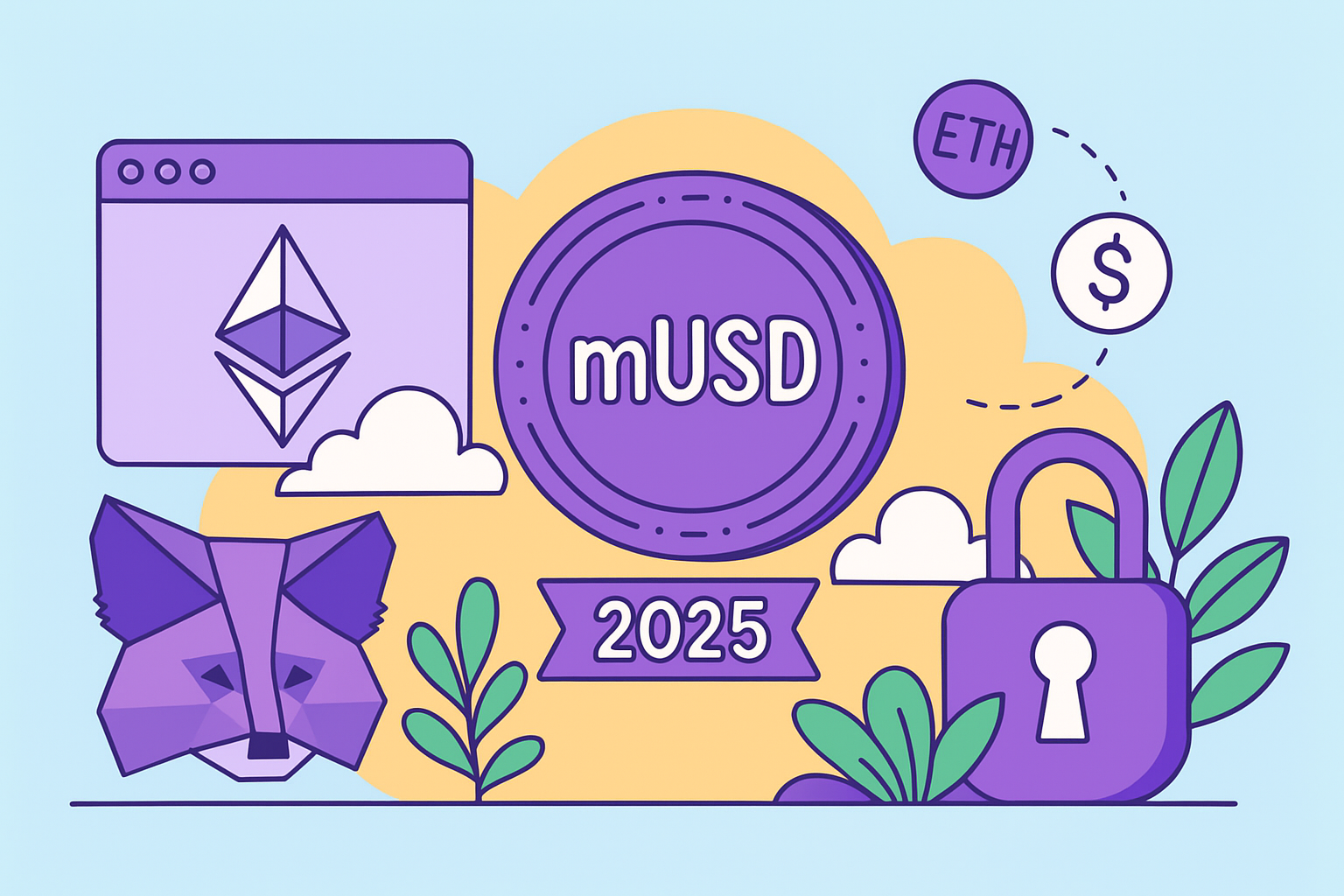
What is MetaMask's mUSD Stablecoin?
mUSD Basic Features
mUSD is a stablecoin that maintains a 1:1 value with the U.S. dollar.
Each token is backed by U.S. Treasury bills held in segregated accounts.
Unlike USDT and USDC, mUSD plans to share some treasury yield with users, a feature that could change how people think about holding stablecoins.
The token uses standard ERC-20 architecture, making it compatible with existing DeFi protocols and exchanges.
- Users can mint mUSD by depositing dollars or other accepted stablecoins through MetaMask's interface.
Technical Specifications
- Token Standard: ERC-20 on Ethereum
- Backing: 1:1 with U.S. Treasury bills (0-180 day maturity)
- Redemption: Direct conversion to USD through MetaMask
- Audit Schedule: Daily attestations planned
- Cross-chain Plans: Arbitrum, Optimism, Polygon, Base
Launch Timeline and Rollout Strategy
August 2025 Launch Schedule
MetaMask plans a controlled rollout for mUSD:
Week 1 (August 13-17): Official announcement and documentation release
Week 2 (August 20-24): Beta access for selected users
Week 3 (August 27-31): Full public launch
September 2025: DeFi protocol integrations begin
Q4 2025: International expansion and additional blockchain support
Initial Availability
The stablecoin will first be available to U.S. users, with international access depending on local regulations.
- MetaMask will use its existing user verification systems to manage the rollout.
The Power Players Behind mUSD
MetaMask's Position
MetaMask, owned by ConsenSys, processes billions in transaction volume monthly.
The wallet's dominance in the Ethereum ecosystem gives mUSD immediate access to millions of active DeFi users.
Bridge (Stripe) - Payment Infrastructure
Bridge provides the payment rails for mUSD.
Stripe acquired Bridge for $1.1 billion in February 2025, marking the payments giant's biggest crypto move to date.
Bridge handles:
- Fiat-to-stablecoin conversions
- KYC/AML compliance
- Payment processing infrastructure
- API services for developers
M^0 Protocol - Issuance Technology
M^0 Protocol provides the technical framework for mUSD issuance.
The protocol allows multiple entities to mint stablecoins while maintaining consistent standards and interoperability.
M^0's role includes:
- Smart contract infrastructure
- Mint and burn mechanisms
- Yield distribution systems
- Cross-chain coordination
The protocol raised $35 million from Bain Capital Crypto and operates with former MakerDAO and Circle team members.
Blackstone - Treasury and Custody
Blackstone, managing over $1 trillion in assets, handles mUSD's treasury operations.
Their involvement brings traditional finance credibility to the project.
Blackstone manages:
- U.S. Treasury bill investments
- Asset custody services
- Risk management
- Regulatory reporting

How mUSD Works: Technical Deep Dive
Minting Process
Users can create mUSD through a straightforward process:
- Connect MetaMask wallet
- Deposit USD via ACH/wire or existing stablecoins
- Receive mUSD at 1:1 ratio minus fees
- mUSD appears in wallet immediately
Institutional minters follow a different path requiring approval and larger minimum deposits.
Reserve Management
mUSD maintains its dollar peg through careful reserve management:
- Primary Assets: Short-term U.S. Treasury bills
- Custody Structure: Bankruptcy-remote vehicles
- Verification: Daily third-party attestations
- Transparency: Public reporting of holdings
Redemption Mechanism
Users can convert mUSD back to dollars:
- Submit redemption request through MetaMask
- Processing within 1-2 business days
- Direct bank deposit or stablecoin swap
- Minimum redemption amounts apply
mUSD vs. USDT vs. USDC: Detailed Comparison
Market Share Analysis
Current stablecoin market breakdown:
- USDT: $160 billion (60% market share)
- USDC: $64 billion (24% market share)
- Others: $46 billion (16% market share)
Feature Comparison
| Feature | mUSD | USDT | USDC |
|---|---|---|---|
| Market Cap | $0 (launching) | $160B | $64B |
| Reserve Transparency | Daily reports | Quarterly | Monthly |
| Yield to Users | Planned | No | No |
| Primary Backing | U.S. Treasuries | Mixed assets | Cash & Treasuries |
| Wallet Integration | Native MetaMask | Third-party | Third-party |
| Regulatory Status | GENIUS Act compliant | Varies | MiCA ready |
| Custody Partner | Blackstone | Multiple | BNY Mellon |
Competitive Advantages
mUSD differentiates itself through:
- Direct integration with MetaMask's 30 million users
- Potential yield sharing from treasury returns
- Stripe's payment infrastructure for easy fiat conversion
- Blackstone's institutional credibility
Regulatory Landscape and Compliance
GENIUS Act Requirements
The GENIUS Act, signed in July 2025, establishes federal rules for stablecoins:
- Permitted Issuers: Banks and approved non-bank entities
- Reserve Requirements: 1:1 backing with approved assets
- Reporting: Monthly public attestations required
- Customer Protection: Clear redemption rights
- Operational Standards: Segregated custody mandatory
mUSD Compliance Strategy
MetaMask structured mUSD to exceed regulatory requirements:
- Federal issuer license application filed
- Daily (not monthly) reserve reporting
- Multiple third-party auditors
- Clear user terms and redemption processes
- Coordination with Treasury Department
International Considerations
For global expansion, mUSD must navigate:
- Europe: MiCA compliance for EU access
- Asia: Singapore and Hong Kong frameworks
- UK: Pending stablecoin regulations
- Other Markets: Country-specific requirements

Market Impact and Industry Implications
Revenue Model Disruption
Traditional stablecoins keep all treasury yield (currently 4-5% annually).
- mUSD's planned yield sharing could force competitors to reconsider their models.
Even sharing 1-2% with users would be significant.
Network Effects
MetaMask's user base creates immediate liquidity:
- 30 million potential users
- Existing DeFi connections
- One-click access in wallets
- No need to use external exchanges
Pressure on Incumbents
USDT and USDC face new challenges:
- User demands for yield sharing
- Pressure for daily transparency
- Competition for DeFi integrations
- Questions about reserve management
Use Cases and Applications
Individual Users
Common uses for mUSD include:
- Savings Alternative: Earn yield on dollar holdings
- DeFi Collateral: Borrow against stable assets
- Trading Pairs: Reduce volatility in crypto trades
- International Transfers: Send money globally
- Bill Payments: Through Stripe integration
Business Applications
Companies can use mUSD for:
- Treasury Management: Hold reserves on-chain
- Vendor Payments: Instant settlement
- Payroll: Pay international contractors
- E-commerce: Accept stable payments
- B2B Transactions: Reduce settlement time
Developer Opportunities
Builders can integrate mUSD for:
- Payment Systems: Add to existing apps
- Yield Products: Build savings applications
- DeFi Protocols: Create lending markets
- Cross-border Tools: Develop remittance services
- Institutional Products: Design enterprise solutions
Risks and Challenges
Technical Risks
- Smart Contract Bugs: Code vulnerabilities could lead to losses
- Bridge Security: Cross-chain transfers add complexity
- Scalability: Ethereum congestion during high demand
- Oracle Failures: Price feed disruptions
Market Risks
- Adoption Speed: Users comfortable with existing options
- Liquidity Depth: Building sufficient trading volume
- Competition Response: USDT/USDC countermoves
- Depegging Events: Maintaining $1 value during stress
Regulatory Risks
- Rule Changes: New regulations could impact operations
- Geographic Restrictions: Some countries may block access
- Compliance Costs: Ongoing regulatory expenses
- Enforcement Actions: Potential penalties for violations

Investment and Yield Opportunities
Yield Generation Model
mUSD plans to generate returns through:
- U.S. Treasury bills (current yield ~4.5%)
- Overnight repo agreements
- Other approved short-term instruments
Potential distribution methods:
- Direct yield to wallet holders
- Rewards for liquidity providers
- Incentives for long-term holders
- Governance token distributions
Integration Benefits
MetaMask users gain advantages:
- One-Click Access: No external platforms needed
- Lower Fees: Reduced transaction costs
- Automatic Features: Yield compounding options
- Portfolio Tools: Integrated tracking and management
Expert Opinions and Market Analysis
Industry Perspectives
- Patrick Collison, Stripe CEO: "Stablecoins are room-temperature superconductors for financial services."
- Luca Prosperi, M^0 Foundation: "The vision is to move this technology forward as the next generation backend for fintech frontends."
Market Predictions
Analysts expect:
- 5-10% market share capture within 12 months
- $10-20 billion in mUSD circulation by end of 2025
- Pressure on USDT/USDC to add yield features
- Increased institutional stablecoin adoption
How to Prepare for mUSD Launch
For Current MetaMask Users
- Update to latest MetaMask version
- Complete identity verification if required
- Review wallet security settings
- Understand mUSD risks and features
- Plan initial allocation strategy
For New Users
- Download MetaMask from official source
- Create and secure wallet with backup phrase
- Add small ETH amount for gas fees
- Complete basic DeFi education
- Follow official announcements
For Institutions
- Review mUSD documentation
- Assess integration requirements
- Consult legal and compliance teams
- Evaluate treasury management implications
- Contact MetaMask institutional team

Conclusion and Future Outlook
Summary
MetaMask's mUSD launch marks a significant shift in the stablecoin market.
With 30 million existing users, institutional partners like Stripe and Blackstone, and plans for yield sharing, mUSD could capture significant market share from USDT and USDC.
The timing aligns with new U.S. regulations that provide clear operating guidelines.
Success depends on smooth technical execution, user adoption, and maintaining the dollar peg during market volatility.
Next Steps
Interested users should:
- Monitor official MetaMask channels
- Prepare wallets and complete verification
- Understand risks before allocating funds
- Consider mUSD's role in their portfolio
- Stay informed on regulatory developments
The stablecoin market continues rapid growth, and MetaMask's entry with mUSD adds another major player to the ecosystem.
For updates on this and other developments, follow the latest stablecoin news.
Read Next:
- How to Build a Decentralized Bridge with LayerZero
- Symbiosis Finance Cross-Chain Aggregator: Full Review and Guide (2025)
- USD.AI Review: Everything You Need to Know
FAQs:
1. When exactly will mUSD launch?
Official announcement expected between August 13-17, 2025, with full public launch by August 31, 2025.
2. How is mUSD different from existing stablecoins like USDT and USDC?
mUSD offers native MetaMask integration, planned yield sharing with users, and daily transparency reports compared to USDT's quarterly and USDC's monthly reporting.
3. What assets back each mUSD token?
Each mUSD is backed 1:1 by U.S. Treasury bills with 0-180 day maturities, held in bankruptcy-remote accounts managed by Blackstone.
4. Will mUSD holders earn yield?
Yes, MetaMask plans to share portion of treasury yields with mUSD holders, though specific rates will be announced at launch.
5. Which blockchains will support mUSD at launch?
Initial launch on Ethereum mainnet, with Arbitrum, Optimism, Polygon, and Base support planned for Q4 2025.