
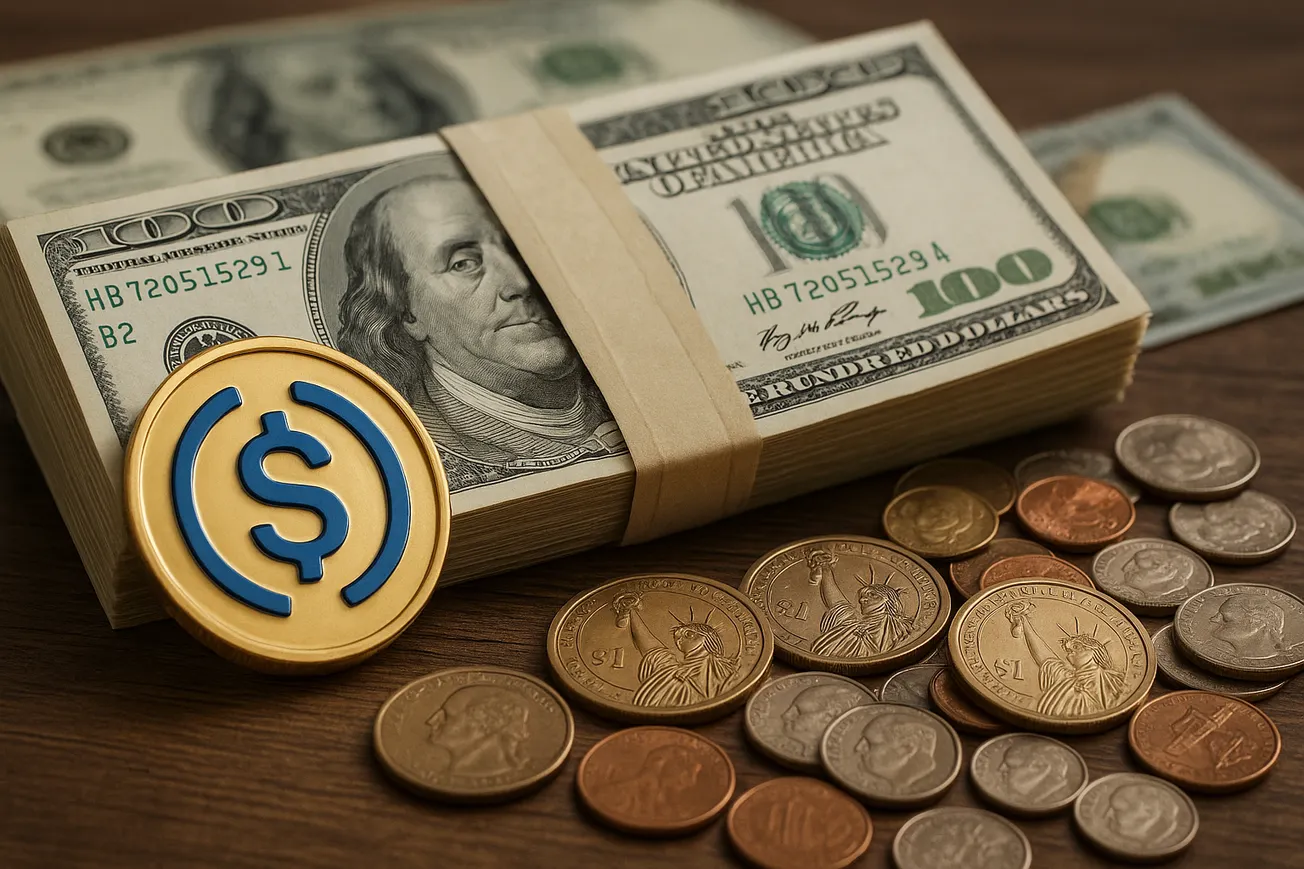
Ever wonder about USDC? It's a big deal in the digital money world. People often ask: is USDC backed by real dollars?
This question is important for anyone using or thinking about using digital currency. We'll look into how USDC works, what backs it, and what that means for you when you use it.
We'll also check out how it fits into the bigger picture of digital finance.
Key Takeaways
- USDC is a stablecoin, meaning its value is meant to stay consistent, usually pegged to the US dollar.
- USDC's stability comes from reserves that are supposed to hold an equal amount of real-world assets, like cash and short-term US Treasury bills.
- Transparency and regular audits are in place to show what's in USDC's reserves, helping build user trust.
- USDC plays a big part in digital payments and decentralized finance (DeFi), helping connect traditional money systems with blockchain technology.
- The future of USDC, and stablecoins in general, will likely be shaped by new rules and ongoing innovation in the digital money space.
Understanding USDC's Core Functionality
What is USDC and How Does it Maintain Stability?
USDC is a type of cryptocurrency called a stablecoin. Its main goal is to keep its value as close as possible to one U.S. dollar. This is different from other cryptocurrencies like Bitcoin, which can have big price swings.
To maintain this stability, USDC relies on a few key things. The most important is that each USDC token is supposed to be backed by assets held in reserve. This backing is what gives people confidence that they can always redeem their USDC for actual dollars.
Think of it like this: if you have a token that represents a dollar, you want to be sure you can exchange that token for a real dollar whenever you want. That's what USDC aims to provide.
The Role of Reserves in Backing USDC
The reserves are what make USDC work. They are the assets that Circle, the company behind USDC, holds to ensure that every USDC in circulation can be redeemed for one U.S. dollar. The composition of these reserves is very important.
Ideally, the reserves should be held in very safe and liquid assets. This means things like cash and short-term U.S. government bonds. The idea is that these assets can be easily converted back into dollars if people want to redeem their USDC.
Having enough high-quality reserves is key to maintaining trust in USDC. If people start to doubt that USDC is fully backed, they might lose confidence and rush to redeem their tokens, which could cause problems.
Issuance and Redemption Mechanisms
USDC's issuance and redemption processes are how new USDC tokens are created and how existing ones are converted back into U.S. dollars. When someone wants to create new USDC, they deposit U.S. dollars with Circle or an authorized partner. Circle then creates the equivalent amount of USDC tokens and sends them to the user. This process increases the USDC in circulation.
Redemption works in reverse. A user sends their USDC tokens back to Circle, and Circle then sends them the equivalent amount of U.S. dollars from the reserves. The USDC tokens that were sent back are then
Is USDC Backed by Real Dollars: The Reserve Question
Composition of USDC's Reserve Assets
So, the big question: is USDC actually backed by real dollars? The answer is a bit more nuanced than a simple yes or no. It's not just about having a dollar sitting in a vault for every USDC in circulation. It's about the quality and liquidity of the assets backing it.
USDC's reserves are primarily held in cash and short-term U.S. Treasuries. Think of T-bills, those super safe government bonds that mature quickly. This is meant to ensure that USDC can always be redeemed 1:1 for U.S. dollars.
For example, Circle, the issuer of USDC, has stated that its reserves are held with regulated financial institutions. This is a key difference from some other stablecoins that might hold riskier assets.
Transparency and Auditing of Reserves
Transparency is key when it comes to stablecoins. If people don't trust that USDC is truly backed, the whole system falls apart. That's why regular audits and attestations are so important.
Circle undergoes monthly attestations by Grant Thornton LLP, a leading accounting firm. These attestations verify that the reserves held are equal to or greater than the amount of USDC outstanding. This provides a level of assurance to users.
These audits are designed to confirm that Circle holds the assets it claims to hold.
It's important to remember that an attestation isn't the same as a full audit. An attestation provides a snapshot in time, while an audit is a more in-depth examination over a longer period.
Addressing Concerns About Reserve Management
Of course, there have been concerns raised about USDC and its reserves. Some people worry about whether Circle can always meet redemption requests, especially during times of market stress. Others question the potential for regulatory changes to impact the stablecoin's stability.
It's worth noting that Circle has taken steps to address these concerns. They've increased transparency, worked closely with regulators, and focused on maintaining a high-quality reserve portfolio.
Here are some common concerns and how they're typically addressed:
The Importance of Trust and Reliability in Stablecoins
Why USDC is Considered a Trusted Stablecoin
Trust is everything when it comes to stablecoins. People need to believe that the digital dollar they hold can actually be redeemed for a real dollar. That's the bottom line. USDC has gained traction because it emphasizes transparency and regulatory compliance, which builds confidence among users.
Think about it: if you don't trust that your stablecoin will hold its value, why would you use it?
USDC's commitment to regular audits and clear reserve management helps it stand out in a crowded market. This is in contrast to stablecoins that might prioritize yield generation over maintaining sufficient reserves.
Mitigating Risks in the Stablecoin Ecosystem
Stablecoins aren't risk-free, but there are ways to make the ecosystem safer. One key aspect is diversification. Don't put all your eggs in one basket. Spreading your holdings across different stablecoins can reduce your exposure to any single point of failure.
Another important factor is understanding the underlying mechanisms of each stablecoin. How are they collateralized? What are the risks associated with their reserve assets? Doing your homework is crucial.
It's also important to remember that stablecoins are still relatively new. The technology is constantly evolving, and regulations are still being developed. Staying informed about the latest developments is essential for managing risk effectively.
Here are some ways to mitigate risks:
- Diversify your stablecoin holdings.
- Understand the collateralization of each stablecoin.
- Stay informed about regulatory changes.
The Impact of Regulatory Scrutiny on Trust
Regulatory scrutiny can be a double-edged sword for stablecoins. On one hand, increased oversight can enhance trust by providing greater transparency and accountability. On the other hand, overly strict regulations could stifle innovation and limit the growth of the stablecoin market.
For example, potential federal oversight could force stablecoin issuers to hold reserves in specific types of assets, like government bonds. This could make stablecoins safer, but it could also reduce their profitability.
Ultimately, the impact of regulatory scrutiny on trust will depend on the specific regulations that are implemented. The goal should be to strike a balance between protecting consumers and fostering innovation. The market needs a healthy, liquid market for stablecoins.
USDC's Role in the Digital Economy
Facilitating Digital Payments and DeFi
USDC has become a pretty big deal in the digital economy, especially when it comes to digital payments and DeFi. It's designed to make moving money around the world faster and cheaper. Think of it as a digital dollar that lives on the internet.
It's used in all sorts of applications, from sending remittances to participating in decentralized lending platforms. For example, a business in the US can pay a supplier in another country using USDC, potentially avoiding hefty bank fees and delays.
Network Effects and Utility of USDC
The more people use USDC, the more useful it becomes. This is what we call a network effect.
The widespread adoption of USDC enhances its utility across various platforms and applications. It's like having a common language that everyone understands, making it easier for different systems to interact.
- Increased liquidity on exchanges
- More integrations with wallets and payment processors
- Greater acceptance by merchants and service providers
USDC's utility is also boosted by its programmability. Developers can build all sorts of applications on top of it, creating new financial products and services. This is a big deal because it opens up possibilities for innovation in the financial sector.
Bridging Traditional Finance and Blockchain
USDC is trying to bridge the gap between traditional finance and the blockchain world. It offers a way for traditional businesses to get involved with crypto without having to deal with the volatility of cryptocurrencies like Bitcoin or Ether.
For example, a company might use USDC to settle transactions on a blockchain network, while still keeping their books in US dollars. This can make things easier for accounting and compliance purposes. It also allows traditional financial institutions to experiment with blockchain technology without taking on too much risk. Circle believes that stablecoins give the US the best of both worlds.
Regulatory Landscape and Future Outlook for USDC
Impact of Potential Federal Oversight
The regulatory environment is a big deal for stablecoins like USDC. Right now, things are a bit unclear, but there's a lot of talk about potential federal oversight. This could mean new rules about how stablecoins operate, what kind of reserves they need to hold, and how they protect consumers.
If the government steps in, it could bring more legitimacy to USDC.
Federal oversight would align Circle with strict regulatory standards, reinforcing trust in USDC.
That said, it could also make things more complicated and expensive for Circle, the company behind USDC. For example, the GENIUS Act could make USDC the go-to stablecoin for institutions and retailers.
Circle's Strategic Moves and Regulatory Compliance
Circle has been pretty proactive about dealing with the regulatory uncertainty. They've been working to comply with existing laws and regulations, and they've even applied for a bank charter. This shows they're serious about playing by the rules and building trust with regulators.
Circle's history building consumer financial products on the blockchain informed the way that they built USDC.
Circle believes that USDC and other commercial dollar-backed stablecoins give the US the best of both worlds: the innovation benefits of an open, competitive, capitalist ecosystem that also increases demand for USD as all USDC are redeemable 1:1 for USD.
Here are some of Circle's strategic moves:
- Hiring top regulatory advisors from day one.
- Applying for a national trust bank charter.
- Working with policymakers to shape stablecoin regulations.
Competition and Innovation in the Stablecoin Market
USDC isn't the only stablecoin out there. It's competing with other stablecoins like Tether (USDT), which has a bigger market share. There are also new players entering the market, and even the possibility of central bank digital currencies (CBDCs) in the future.
This competition is pushing Circle to innovate and find new ways to make USDC more useful and attractive. For example, Circle’s new Circle Gateway tool simplifies USDC use across blockchains, potentially driving adoption.
Here's a quick look at the competition:
| Stablecoin | Market Cap (approx.) | Key Features |
|---|---|---|
| USDT | $156.4 billion | Largest market cap, widely used |
| USDC | Varies | Focus on transparency and regulatory compliance |
| CBDCs | N/A | Government-backed, potential for widespread use |
Navigating Risks Associated with USDC
Understanding Potential Systemic Risks
Let's be real, nothing is without risk, and that includes USDC. We need to consider the broader implications if something goes wrong with a stablecoin as widely used as USDC.
If a major event were to cause a loss of confidence, it could trigger a cascade of redemptions, potentially impacting the entire crypto market. Think of it like a bank run, but on a digital scale.
For example, the USDC depeg in March 2023 showed us how quickly things can unravel and how important it is to diversify.
Distinguishing Between Circle and USDC Operations
It's important to separate Circle, the company behind USDC, from USDC itself. Circle's business decisions and financial health do have an impact, but USDC is designed to function independently.
USDC's value is tied to its reserves, while Circle's value is tied to its operations and future prospects. If Circle were to face financial difficulties, it doesn't automatically mean USDC would become worthless, but it could create uncertainty and affect trust.
Circle's pursuit of a national trust bank charter is a move that could enhance USDC’s credibility through federal oversight.
The Importance of Due Diligence for Users
Don't just blindly trust any asset, including USDC. Do your own research. Understand how it works, what the risks are, and how Circle manages the reserves.
- Read the attestations and audits.
- Follow industry news and analysis.
- Consider diversifying your stablecoin holdings.
It's easy to get caught up in the hype, but taking the time to understand the underlying mechanisms and potential risks is crucial for responsible participation in the crypto space. Remember, your money is on the line.
It's also a good idea to keep an eye on how Circle is integrating USDC across different blockchains, as this can affect its overall utility and risk profile.
Practical Applications and Adoption of USDC
How Businesses and Individuals Utilize USDC
USDC has found its way into various corners of the financial world. Businesses are using it for things like international payments, because it's often faster and cheaper than traditional methods. Think about a small business in the US paying a supplier in Europe; using USDC can cut down on transaction fees and speed up the process. Individuals are also using USDC to send money to family members abroad, especially in countries with unstable currencies.
It's also becoming a popular option for online merchants who want to accept crypto without the volatility of something like Bitcoin. USDC provides a stable value, making it easier to manage finances.
Integration with Exchanges and Wallets
USDC is pretty much everywhere when it comes to crypto exchanges and wallets. Most major exchanges like Coinbase, Binance, and Kraken support USDC, making it easy to buy, sell, and trade. You can also store USDC in a variety of wallets, from hardware wallets like Ledger to software wallets like MetaMask.
This wide availability makes it simple for people to get their hands on USDC and use it in different ways. The stablecoin's utility is enhanced by its easy access.
The Growing Ecosystem Built Around USDC
The USDC ecosystem is expanding rapidly, with new applications and services popping up all the time. One of the biggest areas of growth is in decentralized finance (DeFi), where USDC is used as collateral for loans, a stable trading pair, and a way to earn interest. For example, you can lend out your USDC on platforms like Aave or Compound and earn interest.
There are also projects building payment systems and other financial tools on top of USDC. The more people use USDC, the more valuable it becomes, creating a network effect. It's like Metcalfe's Law: the value of a network grows with the square of the number of users.
USDC's increasing adoption is a testament to its reliability and stability. Its integration into various platforms and services is creating a robust ecosystem that benefits both businesses and individuals. As the digital economy continues to evolve, USDC is poised to play a key role in shaping the future of finance.
Conclusion
So, what does all this mean for you? USDC is a big deal in the world of digital money. It tries to be a stable option in a pretty wild market, and it's backed by real stuff, which is good. Circle, the company behind it, is doing a lot to make USDC more accepted, like trying to get a bank charter. This could make USDC even more reliable and used by more people. But, like anything with money, there are always things to watch out for. No matter how stable something seems, there's always some risk. It's smart to do your own research and understand how it works before you jump in. USDC is changing how we think about money, and it's worth paying attention to, but always be careful with your money.
Frequently Asked Questions
What exactly is USDC?
USDC is a digital currency that aims to stay at a steady value, usually pegged to the U.S. dollar. This means one USDC should always be worth one U.S. dollar. It's built on blockchain technology, making it easy to send money quickly and cheaply around the world without needing a bank.
How does USDC manage to stay at a stable price?
USDC keeps its stable value because it's backed by real assets. For every USDC in circulation, there's a U.S. dollar or a very safe, easy-to-sell asset (like short-term U.S. government bonds) held in reserves. These reserves are regularly checked by independent auditors to make sure everything is correct.
Who holds the money that backs USDC?
The company behind USDC, Circle, works with banks and financial institutions to hold the reserves. They make sure that the money backing USDC is kept separate from Circle's own company funds. This helps keep USDC safe and reliable.
Can I exchange my USDC for regular U.S. dollars?
Yes, USDC is designed to be fully convertible. If you have USDC, you can trade it back for U.S. dollars at any time. This process is usually quick, depending on how fast the regular banking system can handle the transfer.
What are the main uses for USDC?
USDC is used for many things, like sending money across borders, making payments online, and participating in decentralized finance (DeFi) applications. It's popular because it combines the speed of cryptocurrency with the stability of traditional money.
Are there any risks when using USDC?
While USDC is considered very safe due to its backing and regular audits, no financial product is completely without risk. The main risks are related to the stability of the banks holding the reserves or major issues with the U.S. financial system itself. However, these are very unlikely scenarios.