
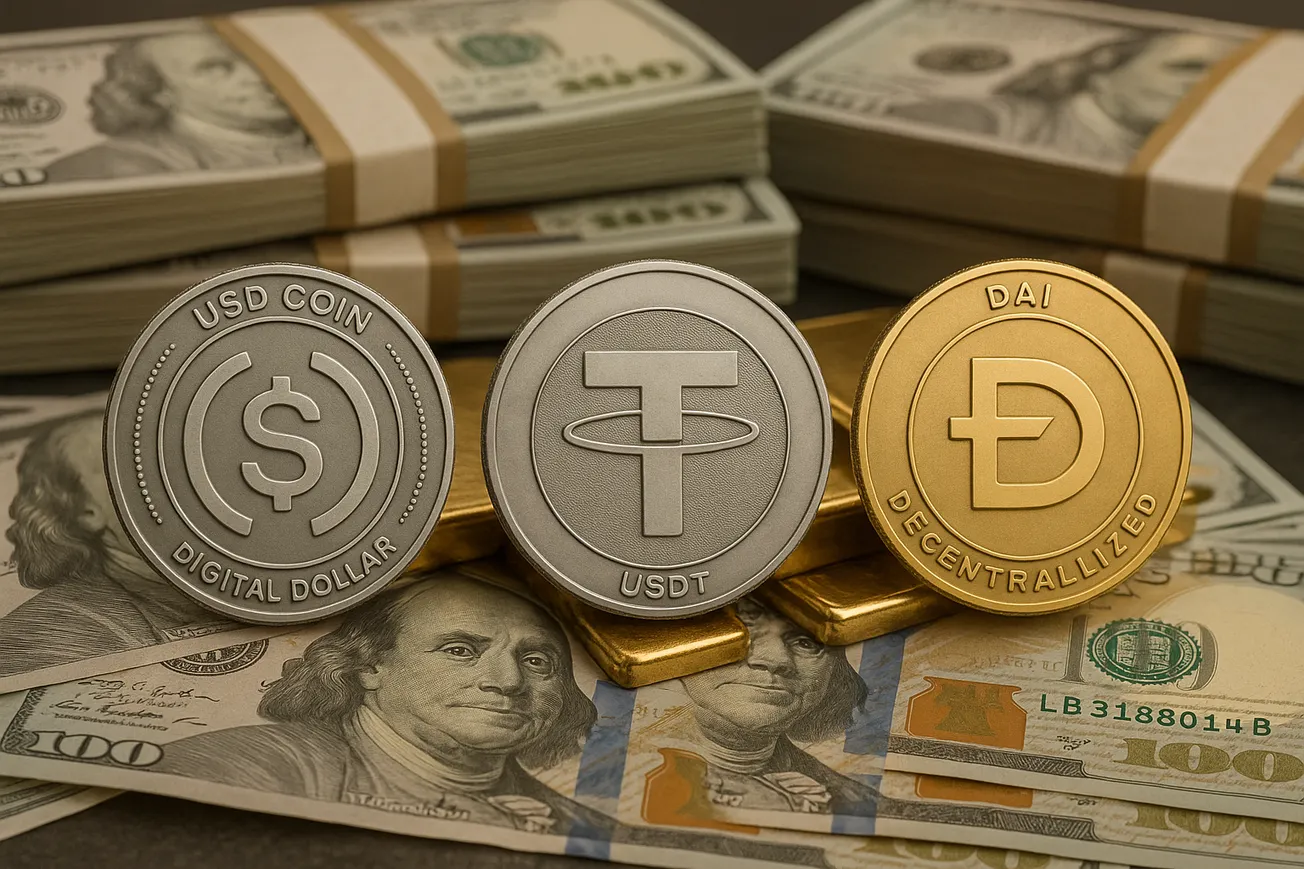
Stablecoins have become a big deal in the crypto world. They're basically digital money designed to stay at a steady price, usually by being tied to something like the US dollar. This stability is super important in a market known for its wild ups and downs. But how exactly do these stablecoins manage to stay so steady? We're going to break down how stablecoins are backed, focusing on three major players: USDC, USDT, and DAI.
Key Takeaways
- Stablecoins are digital currencies that try to keep a stable value, often by linking to a real-world asset like the US dollar. They help make crypto trading less risky.
- There are different ways stablecoins are backed: some use regular money (fiat-collateralized), some use other cryptocurrencies (crypto-collateralized), and some even use things like gold (commodity-backed).
- USDT is a big one, backed by a mix of fiat and other assets. It's great for quick trading, but people sometimes worry about how transparent its reserves are.
- USDC aims for high transparency and follows regulations, backed by actual US dollars in bank accounts. It's popular for decentralized finance (DeFi) but is more centralized.
- DAI is unique because it's backed by other cryptocurrencies and uses a system called MakerDAO to keep its value stable. It's decentralized, but its value can be affected by big swings in the crypto market.
Understanding Stablecoins and Their Purpose
Defining Stablecoins in the Crypto Ecosystem
Stablecoins are a type of cryptocurrency designed to maintain a stable value relative to a specific asset or basket of assets. Think of them as the bridge between the volatile world of crypto and the more predictable world of traditional finance. Serve as ledgers for all transactions.
Their primary goal is to minimize price volatility, making them suitable for everyday transactions and a reliable store of value. For example, a stablecoin pegged to the US dollar aims to maintain a value of $1, providing stability that other cryptocurrencies like Bitcoin often lack.
The Role of Stablecoins in Market Stability
Stablecoins play a vital role in promoting stability within the broader cryptocurrency market. They act as a safe haven during periods of high volatility, allowing traders to move their funds out of more volatile assets without exiting the crypto ecosystem altogether.
This helps to reduce panic selling and excessive price swings. Stablecoins also facilitate arbitrage opportunities, helping to keep prices consistent across different exchanges. For instance, if Bitcoin is trading at a higher price on one exchange compared to another, traders can use stablecoins to quickly move funds and capitalize on the price difference, bringing the markets back into equilibrium.
Why Stablecoins are Essential for Crypto Trading
Stablecoins are essential for crypto trading because they provide a stable base currency for trading pairs. Imagine trying to trade altcoins directly against Bitcoin – the fluctuating value of Bitcoin would make it difficult to accurately assess the value of the altcoin.
Stablecoins offer a more reliable benchmark. They also enable faster and cheaper transactions compared to traditional fiat currencies. For example, using USDT or USDC to move funds between exchanges is significantly faster and less expensive than using traditional wire transfers. This speed and efficiency are crucial for active traders who need to react quickly to market movements.
Stablecoins are becoming increasingly regulated in many places because of the instabilities and losses that have happened in past attempts to create stable coins. They are used for various purposes and are an essential part of modern crypto trading. Therefore, regardless of whether you plan to trade stablecoins, it is important to understand the mechanism of operation of this type of cryptocurrency.
Diverse Mechanisms for Stablecoin Backing
Stablecoins aim to provide the stability of traditional currencies within the volatile crypto market. They achieve this through various backing mechanisms, each with its own set of advantages and disadvantages. Let's explore the main types.
Fiat-Collateralized Stablecoins Explained
Fiat-collateralized stablecoins are probably the easiest to understand. They maintain a reserve of fiat currency, like the U.S. dollar or euro, to back each token. Think of it like this: for every stablecoin in circulation, there's an equivalent amount of fiat currency sitting in a bank account.
For example, for each USDT in circulation, Tether claims to hold a corresponding amount in reserves. This model is straightforward, but it relies heavily on the custodian holding the reserves to be trustworthy and transparent.
Crypto-Collateralized Stablecoins and Overcollateralization
Crypto-collateralized stablecoins take a different approach. Instead of fiat, they use other cryptocurrencies as collateral. Because crypto is more volatile than fiat, these stablecoins typically employ overcollateralization. This means that the value of the crypto backing the stablecoin is greater than the value of the stablecoins issued.
DAI is a prime example. Users deposit crypto like ETH into a smart contract, and in return, they can mint DAI. The system is designed so that the value of the ETH deposited always exceeds the value of the DAI created, providing a buffer against price drops.
Commodity-Backed Stablecoins as Inflation Hedges
Commodity-backed stablecoins are linked to the value of physical assets like gold or silver. These offer a different kind of stability, potentially acting as a hedge against inflation. Instead of relying on fiat or other cryptocurrencies, they tie their value to something tangible.
For instance, PAX Gold (PAXG) represents one troy ounce of gold stored in a vault. Owning PAXG gives you exposure to gold without the hassle of physical storage. These stablecoins can be attractive to investors looking for an alternative to traditional assets.
Tether (USDT): The Market Leader's Backing
USDT's Fiat-Collateralized Reserve Structure
USDT, issued by Tether Limited, is the most used stablecoin. It's designed to maintain a 1:1 peg with the U.S. dollar.
This peg is supposedly achieved through a reserve of assets that are equal to or greater than the number of USDT in circulation. These reserves have been a point of contention, but let's look at the basics.
USDT's reserves are said to include a mix of cash, cash equivalents, and other assets. This structure is intended to provide stability and ensure that each USDT token can be redeemed for one U.S. dollar.
Advantages of Using USDT for Liquidity and Trading
USDT's dominance in the stablecoin market brings several advantages. Its high liquidity makes it a preferred choice for traders.
It's widely accepted across most crypto exchanges. This widespread adoption facilitates quick and easy transfers across multiple blockchains.
Here's a quick look at why traders like it:
- High liquidity: Easy to buy and sell without significant price slippage.
- Broad acceptance: Available on almost every major exchange.
- Fast transactions: Supports multiple blockchains for speedy transfers.
Addressing Transparency and Regulatory Concerns with USDT
USDT has faced its share of scrutiny, particularly regarding the transparency of its reserves. There have been questions about whether the reserves are truly sufficient to back all USDT in circulation.
Regulatory bodies have also taken a keen interest, raising concerns about the composition and auditing of Tether's reserves. Tether publishes reports on its reserve backing, but the level of detail and independent verification have been debated.
It's important to remember that while USDT offers convenience and liquidity, users should stay informed about the ongoing discussions around its transparency and regulatory compliance. These factors can impact the perceived risk and overall stability of the stablecoin.
Here's a summary of the key concerns:
- Transparency: Questions about the composition and auditing of reserves.
- Regulatory scrutiny: Ongoing investigations by financial authorities.
- Potential risks: Impact on stability if reserves are insufficient.
USD Coin (USDC): A Focus on Transparency and Compliance
USDC is interesting because it really tries to be transparent and compliant. It's not just about being a stablecoin; it's about doing it the right way, according to regulations.
USDC's Regulated Fiat-Backed Reserves
USDC is backed by U.S. dollars held in regulated financial institutions. This means every USDC token should have a corresponding dollar sitting in a bank account.
This is different from some other stablecoins that might hold a mix of assets, some of which could be riskier. USDC aims for simplicity and safety by sticking to good old USD. For example, monthly reports detail the exact holdings, giving users confidence.
Benefits of USDC for DeFi and Institutional Use
USDC's transparency and compliance make it attractive for both DeFi and institutional players. DeFi protocols like having a stablecoin they can trust, and institutions need to know they're using something that won't cause regulatory headaches.
USDC's regulated nature makes it a bridge between traditional finance and the crypto world. It's used in lending, borrowing, and trading across various platforms. For example, institutions might use USDC to settle transactions or manage their crypto exposure in a compliant manner.
Considerations Regarding USDC's Centralized Control
One thing to keep in mind with USDC is that it's centrally controlled. Circle and Coinbase are the main entities behind it, and they have the power to freeze or blacklist addresses.
This is a trade-off. You get the benefits of compliance and security, but you also give up some of the decentralization that's core to crypto. For example, if an address is suspected of illegal activity, Circle can freeze the USDC held there. This is a contrast to something like DAI, which aims for more decentralization. USDC is a unique stablecoin known for its transparency.
While the centralized control of USDC offers regulatory compliance and security, it also introduces potential risks. Users must trust that Circle and Coinbase will act responsibly and in accordance with regulations, as these entities have the power to freeze or blacklist addresses, impacting the accessibility and usability of USDC for affected individuals.
Dai (DAI): Decentralized Stability Through Crypto Collateral
DAI's Crypto-Backed and Overcollateralized Model
DAI operates differently than USDT and USDC. It's a decentralized stablecoin, meaning it isn't backed by fiat currency like the U.S. dollar. Instead, DAI relies on a system of crypto collateral.
This collateral is locked in smart contracts on the Ethereum blockchain. Because crypto assets can be volatile, DAI employs overcollateralization. This means that more than 100% of the value of DAI in circulation is backed by crypto assets. For example, if $1 million DAI is in circulation, more than $1 million worth of crypto is locked as collateral. This acts as a buffer against price drops in the collateral assets. You can see the current collateralization ratios on MakerDAO's website.
The Role of MakerDAO in DAI's Decentralized Governance
MakerDAO is the decentralized autonomous organization (DAO) that governs DAI. MakerDAO token holders vote on key parameters of the DAI system. These parameters include things like the types of crypto assets that can be used as collateral, the collateralization ratios for each asset, and the stability fee (interest rate) charged on DAI loans.
This governance model is designed to be transparent and community-driven. Anyone holding the Maker (MKR) token can participate in the governance process. This contrasts sharply with the centralized control seen in stablecoins like USDC.
Understanding DAI's Vulnerabilities to Market Volatility
While overcollateralization helps mitigate risk, DAI isn't immune to market volatility. A sharp and sudden drop in the price of the collateral assets could trigger liquidations.
If the value of the collateral falls below a certain threshold, the smart contracts automatically sell off the collateral to ensure DAI remains pegged to $1. This can lead to cascading liquidations and further price drops, a risk inherent in crypto-backed stablecoins. Also, the complexity of the DAI's multi-collateral system can be a source of risk, as unforeseen interactions between different collateral types could potentially destabilize the peg.
DAI's reliance on crypto collateral and decentralized governance presents both opportunities and challenges. While it offers a more trustless and transparent alternative to fiat-backed stablecoins, it also introduces new risks related to market volatility and the complexity of decentralized systems. Understanding these factors is key to evaluating the suitability of DAI for your specific needs.
Comparing the Backing of Major Stablecoins

Key Differences in Collateral Types
When we look at USDT, USDC, and DAI, the most obvious difference is what backs them. USDT and USDC are primarily fiat-collateralized, meaning they claim to hold reserves of traditional currencies like the U.S. dollar. DAI, on the other hand, is crypto-collateralized, using other cryptocurrencies like ETH as backing.
This difference in collateral has big implications for stability and trust. For example, USDC's regulated fiat-backed reserves are audited regularly.
Issuance and Governance Models Compared
Issuance and governance are also key differentiators. USDT is issued by Tether Limited, a centralized entity. USDC is managed by Circle, which also operates under a centralized model but with a greater emphasis on regulatory compliance.
DAI is unique because it's governed by MakerDAO, a decentralized autonomous organization. This means that changes to the protocol and the stablecoin's parameters are decided by a community vote, offering a more decentralized approach.
Here's a quick comparison:
| Feature | USDT | USDC | DAI |
|---|---|---|---|
| Issuer | Tether Limited | Circle | MakerDAO |
| Collateral | Fiat (USD, etc.) | Fiat (USD) | Crypto (ETH, etc.) |
| Governance | Centralized | Centralized | Decentralized |
| Transparency | Limited | Higher | High (on-chain) |
Implications for User Trust and Security
The backing and governance models directly impact user trust and security. Stablecoins backed by transparent and regularly audited reserves, like USDC, tend to inspire more confidence. The lack of transparency around USDT's reserves has often led to concerns about its solvency.
DAI's overcollateralization model aims to provide a buffer against market volatility, but it also introduces complexity and potential risks related to the underlying crypto assets. Ultimately, the choice of stablecoin depends on an individual's risk tolerance and priorities.
It's important to remember that no stablecoin is entirely risk-free. Each has its own set of vulnerabilities, whether it's regulatory risk for centralized stablecoins or smart contract risk for decentralized ones. Understanding these risks is crucial for making informed decisions.
Choosing the Right Stablecoin for Your Needs
It's easy to get lost in the weeds when you're trying to pick the right stablecoin. Each one has its own quirks and potential pitfalls. Let's break down what you should be thinking about.
Assessing Risk and Transparency in Stablecoin Selection
When you're picking a stablecoin, risk and transparency are the big things to keep in mind. You need to know what you're actually holding and how safe it is.
- Look into the reserves. Are they real, and are they what the issuer says they are?
- Check out the audits. Do independent firms regularly check the books?
- Consider the regulatory environment. Is the stablecoin playing by the rules?
For example, USDC's regulated fiat-backed reserves are audited regularly, which gives some people more confidence than, say, USDT, which has faced questions about its reserves in the past. It's all about doing your homework.
Matching Stablecoin Features to Investment Goals
Not all stablecoins are created equal, especially when it comes to what you can do with them. Some are better for trading, others for earning yield, and some for just holding value.
- If you're day trading, you might want a stablecoin with high liquidity, like USDT.
- If you're looking for something to park your money in and earn interest, you might consider DAI in a DeFi protocol.
- If you're worried about regulatory crackdowns, you might lean towards a more decentralized option.
Think about what you're trying to achieve and pick the stablecoin that fits best. For instance, if you're using stablecoins for payroll, you'll want one that's widely accepted and easy to convert to fiat.
Future Outlook for Stablecoin Backing and Regulation
The stablecoin world is changing fast. Regulations are coming, and the way stablecoins are backed could look very different in a few years.
- Keep an eye on what regulators are doing. New rules could shake things up.
- Watch for new types of stablecoins. We might see more commodity-backed or algorithmic options.
- Think about how central bank digital currencies (CBDCs) could affect stablecoins.
It's a good idea to stay informed and be ready to adapt. The future of stablecoins is still being written, and it's going to be interesting to see how it all plays out. The market leader's backing might not be the market leader forever.
Conclusion
So, we've looked at how stablecoins like USDT, USDC, and DAI work. Each one has its own way of staying stable, whether it's by holding regular money in a bank or using other cryptocurrencies. Knowing these differences is pretty important. It helps you pick the right one for what you need, whether you're just trading, sending money, or trying out new crypto apps. The stablecoin world is always changing, so keeping up with how they're backed and what's new is a good idea for anyone in crypto.
Frequently Asked Questions
What exactly are stablecoins?
Stablecoins are like special digital money that tries to keep a steady value. Unlike Bitcoin, which can go up and down a lot, stablecoins are usually tied to something stable, like the U.S. dollar. This makes them good for everyday buying and selling, or for keeping your money safe from big changes in the crypto market.
How do stablecoins keep their value steady?
They stay stable by being backed up by something. Most often, they're backed by real money, like dollars, held in a bank. Some are backed by other cryptocurrencies, and a few are even tied to things like gold. The idea is that for every stablecoin out there, there's a matching asset making sure its value doesn't change much.
What backs up Tether (USDT)?
USDT is backed by a mix of real money, like cash, and other types of investments. It's the biggest stablecoin and is used a lot for trading on crypto exchanges because it's so widely available and easy to move around.
How is USD Coin (USDC) backed?
USDC is backed by actual U.S. dollars held in special bank accounts. It's known for being very clear about its money and following rules, which makes it popular with bigger companies and for use in new kinds of online finance (DeFi).
What about Dai (DAI)? How does it work?
DAI is different because it's backed by other cryptocurrencies, not real money. To get DAI, you have to put up more crypto than the DAI you want to create, which helps keep it stable even if the crypto it's backed by changes value. It's managed by a community of users, making it more decentralized.
How do I choose the right stablecoin for me?
When picking a stablecoin, think about how open they are with their money, how well they follow rules, and how they're managed. If you want something super clear and regulated, USDC might be for you. If you need something widely used for trading, USDT is a common choice. And if you like the idea of decentralized money backed by crypto, DAI could be a good fit.