

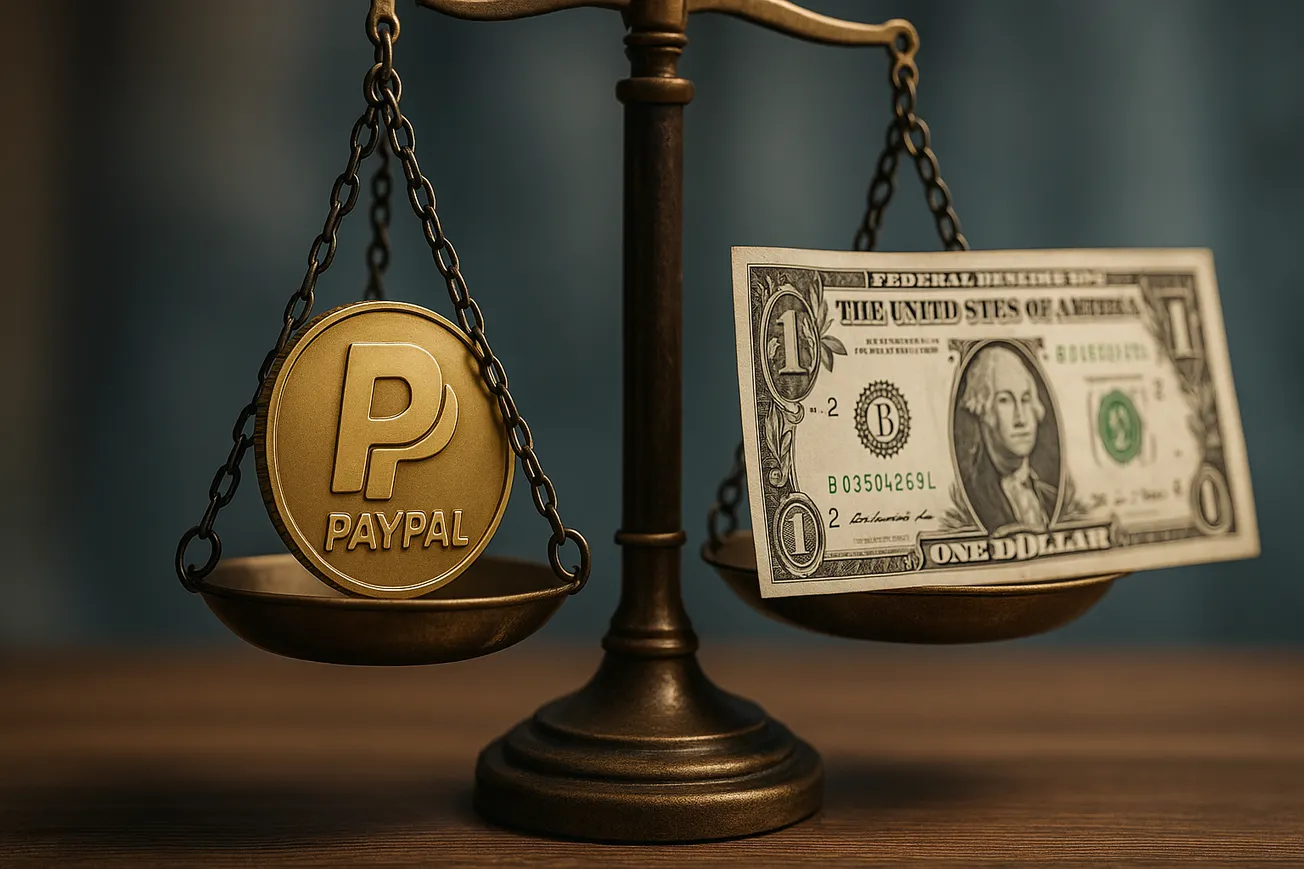
So, you've heard about PayPal USD, or PYUSD, right? It's PayPal's own stablecoin, and if you're wondering how PYUSD works and why it even exists, you're in the right place. Basically, it's all about trying to make digital money less, well, bouncy, and more like your regular dollar. We'll get into the nuts and bolts of how it keeps its value, what makes it different, and why it could be a big deal for how we pay for things online.
Key Takeaways
- PYUSD is a stablecoin from PayPal, meaning it aims to stay at a 1:1 value with the US dollar, which helps avoid big price swings.
- The way how PYUSD works is that it's backed by actual reserves, like cash and short-term government bonds, to keep its value steady.
- PayPal teamed up with Paxos, a regulated company, to handle the creation and holding of PYUSD, adding a layer of trust.
- You can use PYUSD for everyday stuff within the PayPal world, like sending money or paying for things, making digital payments easier.
- PYUSD could help connect the old-school financial system with the newer blockchain world, possibly making stablecoins more common for everyone.
Understanding PayPal USD (PYUSD)
Defining PYUSD as a Stablecoin
PayPal USD, or PYUSD, is PayPal's take on a stablecoin. It's designed to keep a steady value, unlike other cryptos that jump around a lot. Think of it as a digital dollar crypto-alternative within the PayPal system.
It's meant to bring the benefits of blockchain to everyday transactions without the usual price swings.
The 1:1 Peg to the US Dollar
PYUSD aims to maintain a 1:1 peg with the US dollar. This means one PYUSD should always be worth one US dollar. This is achieved through a reserve of assets, mostly US dollars and short-term treasuries, held in custody.
If you want to buy PYUSD, new tokens are created, and an equivalent amount of US dollars is added to the reserve. If you sell PYUSD, the tokens are removed from circulation.
Minimizing Price Volatility
PYUSD's design focuses on keeping its value stable. This is important because it makes it more useful for payments and transfers.
Price stability is key for a stablecoin to be used in everyday transactions. Volatility makes it hard for businesses to accept it, and for individuals to use it as a reliable store of value. PYUSD's mechanisms are designed to minimize these fluctuations.
Here's a quick comparison:
| Feature | PYUSD | Bitcoin |
|---|---|---|
| Price Stability | High | Low |
| Backing | US Dollar | Decentralized |
| Use Case | Payments | Store of Value, Speculation |
Core Mechanisms of PYUSD's Operation
Asset-Backed Reserve System
PYUSD operates using an asset-backed reserve system. This means that for every PYUSD token in circulation, there is a corresponding amount of US dollars and short-term U.S. Treasuries held in reserve. This reserve is what gives PYUSD its stability, as it ensures that each token can be redeemed for one U.S. dollar.
Think of it like this: if there are 10 million PYUSD tokens out there, there should be at least $10 million in a bank account somewhere, backing it up. This backing ensures stability.
Dynamic Supply Adjustment
PYUSD's supply isn't fixed; it changes based on demand. When more people want to buy PYUSD, new tokens are created, and the reserve is increased with an equivalent amount of USD. Conversely, when people redeem PYUSD for USD, the tokens are removed from circulation, reducing the supply.
This dynamic adjustment mechanism helps maintain the 1:1 peg. It's pretty straightforward: more demand, more PYUSD; less demand, less PYUSD. This keeps the price stable.
Collaboration with Paxos for Issuance
PayPal partners with Paxos Trust Company to issue and manage PYUSD. Paxos is a regulated financial institution that specializes in digital assets and blockchain technology. They are responsible for holding the reserves, minting new PYUSD tokens, and burning tokens when they are redeemed.
Paxos' involvement brings a level of regulatory oversight and trust to the PYUSD ecosystem. They handle the technical stuff, like creating and destroying the stablecoin tokens, so PayPal can focus on integrating it into their platform.
The collaboration with Paxos is important because it provides a regulated framework for PYUSD's operation. This helps to build trust and confidence among users, as they know that the stablecoin is being managed by a reputable and compliant financial institution.
Here's a quick summary of the key mechanisms:
- Asset-backed reserves: Each PYUSD is backed by USD and U.S. Treasuries.
- Dynamic supply: Supply adjusts to meet demand, maintaining the peg.
- Paxos partnership: Paxos handles issuance and reserve management.
PYUSD's Integration Within the PayPal Ecosystem
Seamless User Experience
PayPal has really made it easy to use PYUSD if you're already in their system. It's not some separate, complicated thing. You can just send, receive, and hold PYUSD right in your PayPal account.
Think about it: over 400 million people already use PayPal. Now they can get into crypto payments without needing a new wallet or exchange. It's all in one place, which is pretty convenient.
Facilitating Digital Payments
PYUSD is meant to make digital payments faster and more secure. It's supposed to be a stable way to pay online and send money across borders.
Because it's tied to the dollar, it's less wild than other cryptocurrencies. This makes it a more reliable option for everyday transactions. For example, a business might prefer getting paid in PYUSD because they know the value won't suddenly drop.
Interoperability with Venmo and Business Solutions
PYUSD isn't just for PayPal. It works with Venmo, too. That means you can send PYUSD to your friends just like you send them regular money on Venmo.
Businesses can also accept PYUSD through PayPal's business tools. This opens up stablecoin adoption to more people and makes it easier for businesses to get into crypto without a lot of hassle.
PayPal's integration of PYUSD is a big deal because it brings stablecoins to a huge audience. It's not just for crypto enthusiasts anymore. Regular people can start using it for everyday stuff, which could really change how we think about digital money.
Key Use Cases for PayPal USD
Stable Transactions for Businesses
PYUSD offers businesses a stable and predictable way to transact, especially when dealing with digital assets. Its peg to the U.S. dollar removes the price volatility associated with other cryptocurrencies. This makes it easier for businesses to manage their finances and accept digital payments without worrying about sudden value fluctuations.
For example, a small online retailer could use PYUSD to accept payments for goods and services, knowing that the value of their earnings won't change drastically overnight.
Enabling Efficient Micro-Payments
PYUSD is well-suited for micro-payments, which are small transactions that are often impractical with traditional payment methods due to fees. Because PYUSD transactions can be executed with lower fees, it opens up possibilities for new business models and applications.
Consider content creators who want to monetize their work through small contributions from their audience. PYUSD can facilitate these small transactions efficiently, allowing creators to receive payments for individual articles, videos, or songs without high transaction costs.
Enhancing Peer-to-Peer Transfers
PYUSD simplifies and speeds up peer-to-peer (P2P) transfers, especially across borders. Traditional international money transfers can be slow and expensive, but PYUSD offers a faster and more cost-effective alternative.
Imagine a person sending money to a relative in another country. Using PYUSD, the transfer can be completed in minutes with minimal fees, compared to the days and higher costs associated with traditional wire transfers.
PYUSD's integration within the PayPal and Venmo ecosystems makes it incredibly easy for users to send and receive money. This ease of use, combined with the stability of the U.S. dollar peg, makes it a compelling option for everyday transactions.
Here's a quick summary of the benefits:
- Faster transaction times.
- Lower fees compared to traditional methods.
- Increased accessibility for users without bank accounts.
Advantages of PYUSD Over Traditional Methods
Faster Transaction Speeds
Traditional payment methods can be slow. Think about waiting days for a check to clear or for an international wire transfer to go through. PYUSD transactions? They're much faster. PYUSD transactions can settle in seconds, which is a big deal for both consumers and businesses.
This speed comes from the blockchain tech that PYUSD uses. It cuts out a lot of the intermediaries that slow things down in traditional finance.
Reduced Cross-Border Fees
Sending money across borders can be expensive. Banks charge fees, and there can be exchange rate markups. These costs can really add up, especially for smaller transactions. PYUSD offers a way to bypass many of these fees.
For example, someone sending money to family abroad could save a significant amount using PYUSD compared to a traditional wire transfer. It's more efficient and often cheaper.
Stability Compared to Volatile Cryptocurrencies
One of the biggest challenges with cryptocurrencies like Bitcoin is their price volatility. A business might accept Bitcoin as payment one day, only to find its value has dropped significantly the next. PYUSD, as a stablecoin, aims to solve this problem.
PYUSD is pegged to the US dollar, meaning its value is designed to remain relatively stable. This makes it a more reliable option for everyday transactions compared to other cryptocurrencies that can experience wild price swings.
Here's a quick comparison:
| Feature | PYUSD | Bitcoin | Traditional Bank Transfer |
|---|---|---|---|
| Volatility | Low | High | Low |
| Transaction Speed | Fast | Varies | Slow |
| Cross-Border Fees | Low | Low | High |
PYUSD offers a middle ground, combining the speed and lower fees of crypto with the stability of traditional currencies. It's a step towards mainstream stablecoin use.
Regulatory Framework and Trust
Paxos as a Regulated Issuer
PYUSD's credibility is significantly boosted by the fact that it's issued by Paxos. Paxos is a regulated blockchain infrastructure company, meaning they're under the watchful eye of financial regulators in the United States. This oversight is important because it makes sure PYUSD follows the rules, which gives users a sense of security and trust.
Think of it like this: Paxos is like a bank that has to follow all the banking regulations, ensuring they're not just making up the rules as they go along.
Oversight by Financial Regulators
The regulatory landscape for stablecoins is still developing, but the fact that Paxos is supervised by financial regulators is a big deal. It means they have to meet certain standards for things like reserves, transparency, and anti-money laundering (AML) compliance.
This oversight helps to protect users and the broader financial system. For example, regulators might require Paxos to hold a certain amount of US dollars or other safe assets in reserve to back each PYUSD token. This is similar to how banks are required to hold a certain amount of capital to protect depositors.
Building User Confidence
Trust is everything when it comes to stablecoins. People need to believe that each PYUSD is truly worth one US dollar.
Here are some ways PYUSD builds user confidence:
- Regular audits of reserves: These audits verify that Paxos actually has the assets they say they do.
- Transparency about how PYUSD works: The more people understand how it works, the more comfortable they'll be using it.
- Compliance with regulations: Knowing that PYUSD is following the rules helps to build trust.
The regulatory framework surrounding stablecoins is constantly evolving. As regulations become clearer and more consistent, it will likely lead to even greater adoption of stablecoins like PYUSD. This increased clarity will help to level the playing field and encourage innovation in the digital asset space. It's a bit like the early days of the internet – once the rules of the road were established, it really took off.
Different regions are taking different approaches to stablecoin regulation. For example, the EU has introduced MiCA regulation to create a unified framework for crypto-assets. Singapore has finalized its stablecoin regulatory framework, focusing on single-currency stablecoins. Japan was one of the first countries to establish a regulatory framework for stablecoins. The United States is still working on a comprehensive regulatory framework. These different approaches highlight the global effort to address the challenges and opportunities presented by stablecoins.
The Broader Impact of PYUSD Adoption
Bridging Traditional Finance and Blockchain
PYUSD is a big step toward connecting old-school finance with the new world of blockchain. It brings the stability and trust of the US dollar to digital currencies. This makes it easier for people to use [stable transactions for businesses](#cb08] without worrying about wild price swings.
It's like giving traditional finance a bridge to the blockchain world, making it more accessible to everyone.
Accelerating Mainstream Stablecoin Use
PYUSD could really speed up how many people start using stablecoins. PayPal has a huge user base, and now those users can easily get their hands on a stablecoin. This could lead to more people using digital currencies in their everyday lives.
Think about it: over 400 million people can now access PYUSD without needing to understand complicated blockchain stuff. That's a game-changer.
Potential for Decentralized Finance Integration
PYUSD opens up some interesting possibilities in the world of decentralized finance (DeFi). People can use PYUSD to lend, borrow, and trade assets on DeFi platforms. This gives them a stable option for USD Coin (USDC) adoption when they're doing DeFi stuff.
PYUSD's introduction is a strategic move towards merging traditional financial systems with the blockchain world. Its association with PayPal's brand recognition and massive user base bodes well for its widespread adoption and growth. With its value pegged to the US dollar, PYUSD provides a stable and reliable digital asset that can be seamlessly integrated into PayPal's existing infrastructure, enabling users to engage with cryptocurrencies without exposure to extreme volatility.
Here are some potential impacts:
- More people using DeFi.
- More stablecoin options in DeFi.
- More innovation in DeFi products.
Conclusion
So, that's the deal with PayPal USD (PYUSD) and how it tries to stay at that 1:1 value with the US dollar. It's pretty clear that keeping a stablecoin stable isn't just a simple thing; there are a lot of moving parts. Things like making sure there's enough money in the reserves, dealing with rules, and just generally making sure people trust it are all big pieces of the puzzle. PYUSD has a good shot because it's backed by PayPal, which is a huge name in payments. But, like any new thing in the crypto world, it's got its own set of hurdles to jump over. Watching how PYUSD handles these things will be interesting, especially as more people start using digital money for everyday stuff.
Frequently Asked Questions
What exactly is PayPal USD (PYUSD)?
PYUSD is a digital currency made by PayPal. It's designed to always be worth one US dollar. This means it's a stablecoin, which helps it avoid the big price swings you see with other cryptocurrencies.
How does PayPal USD (PYUSD) actually work?
PYUSD works like other stablecoins. Each PYUSD is backed by actual US dollars and other safe assets. A company called Paxos manages these funds and makes sure that for every PYUSD out there, there's enough money to cover its value.
Why did PayPal create PYUSD?
PayPal made PYUSD to make digital payments easier and more reliable. It lets users send, receive, and hold this digital dollar right in their PayPal accounts. It's meant to bridge the gap between regular money and the world of cryptocurrencies.
What can I use PayPal USD (PYUSD) for?
You can use PYUSD for many things. It's good for everyday payments, sending money to friends or family, and even for businesses to accept payments without worrying about big price changes. It aims to make online transactions smoother and more stable.
What are the benefits of using PayPal USD (PYUSD) instead of traditional payment methods?
PYUSD offers several perks over old-school payment methods. It can make transactions faster, especially across borders, and often with lower fees. Plus, because it's stable, you don't have to worry about its value suddenly dropping like some other digital currencies.
Is PayPal USD (PYUSD) regulated?
Yes, PYUSD is regulated. It's issued by Paxos, a company that follows rules set by financial authorities. This oversight helps build trust and makes sure that PYUSD operates in a safe and sound way.


%20Maintains%20Its%20Peg%3A%20Mechanisms%20%26%20Challenges)